[WARNING: The following contains spoilers for seasons one and two of “Hazbin Hotel.”]
As a recovering theater kid, sometime Disney adult, and all-around cartoon junkie, it comes as no surprise that I love “Hazbin Hotel.” And I’m not alone; Vivienne Medrano’s musical take on Dante’s Divine Comedy has become a global phenomenon, with its recently wrapped second season breaking viewership records on Amazon Prime Video as its original songs amass millions of views on YouTube.
However, while season two boasts the same foul-mouthed sense of humor and affection for its cast that made the series a favorite, it also reveals how the limits of the streaming model are holding the series back from perfection.
“Hazbin”’s second season picks up a month after the first: Princess Charlie Morningstar (Erika Henningsen) and her friends are basking in celebrity after fighting off Heaven’s army, but it hasn’t translated into a genuine interest in the Hotel’s mission of redeeming damned souls.
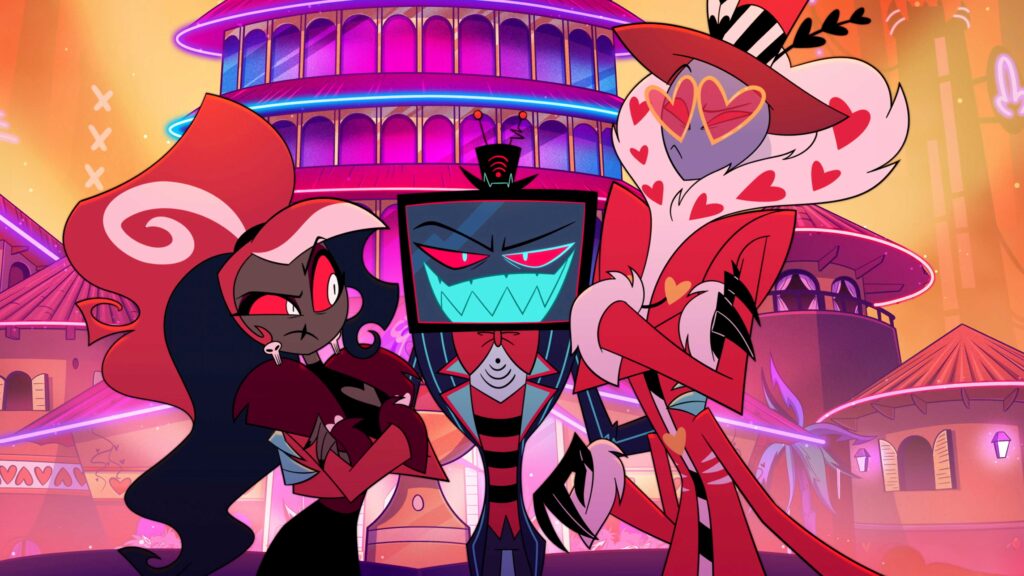
Unfortunately, the Vees, Hell’s overlords of modern media, seize on the opportunity to whip up a populist uprising against the Kingdom of God and denigrate the Hotel’s mission—unaware that redemption is possible, as Sir Pentious’s (Alex Brightman) sacrifice last season already proved.
In many ways, the Vees’ leader, Vox (Christian Borle), is the real main character of season two. He performs 10 of the show’s 20 new songs (compared to Charlie’s six) and his actions are predominately what drive the story forward.
Vox is a very 21st century kind of villain: a savvy media mogul who exerts his power through spin and misinformation, stirring up an unnecessary war that benefits him above all else. In case you weren’t sure how relevant he’s meant to be, the song “VOX POPULI” includes lines like “annex their real estate,” “Manifest Destiny, long as you invest in me,” and, of course, “We can make Hell great again!”
There’s a great deal of frustration in seeing Charlie try to challenge Vox’s smear campaign head on. Charlie may be an all-loving heroine who believes every soul in Hell is capable of redemption, but she’s also the daughter of Lucifer, Sin of Pride (Jeremy Jordan)—a combination that leads to an overconfidence in her abilities that refuses to be diminished by more level-headed voices.
Season two runs into even bigger problems with its release format. Medrano and her team want “Hazbin” to be an ensemble show where every character has a chance to shine (and many of them do), but with only eight episodes to tell its story, things tend to fall by the wayside.
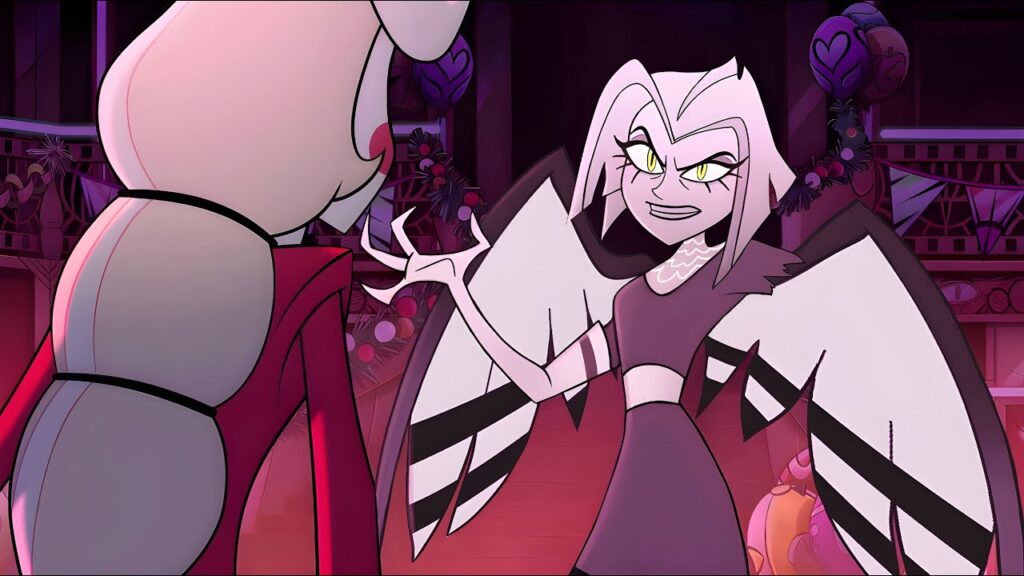
Perhaps the biggest victims are the key figures in Heaven’s army: Abel (Patrick Stump), son of Adam and new head of the Exorcists, and Lute (Jessica Vosk), Adam’s former right hand. While Abel is more peaceful and cowardly than his late father was, Lute is fixated on punishing sinners and avenging her former leader, as outlined in one of the season’s best songs, “Gravity.”
That said, the goings-on of Hell take precedence, leaving both Abel and Lute to sit on their hands until the climactic finale in “Hear My Hope.” Just as Lute is set to take her righteous vengeance, Abel finds his courage in a hard-rock verse and orders Lute to stand down—and she immediately complies. After such an epic buildup, the resolution to Lute’s crusade is kicked down the road, leaving the audience wondering: What (besides an admitted banger) was the point?
Speaking of angels, let’s talk about Angel Dust (Blake Roman), whose biggest role in act one of this season comes in the episode “Behind Closed Doors,” when Charlie tries to disprove Vox’s slander by speedrunning his redemption (which ends in humiliation for both of them).
The episode “Scream Rain” shocked viewers by revealing that Angel has been an unwitting spy for Vees the whole time, and his rescue from their clutches becomes a flashpoint of the final episode. Even after Vox is defeated in the finale, Angel moves back in with the Vees, willing to live with his abusers if it means keeping the Hotel safe from him.
Angel ultimately becomes the most tragic character of the season: wanting to improve himself, to be redeemed, but used as a prop by his friends and a puppet by his enemies. It doesn’t give him much agency in the story, but it does set the stage for him to come into his own in season three.
And then there’s Alastor the Radio Demon (Amir Talai), who’s been a “Hazbin” fan favorite from the start. Mysterious, powerful, and gloriously sassy, Alastor mostly hovers around the edge of the story, snarking and stirring up drama as he pursues his own enigmatic agenda.
A longer string of episodes might have teased out Alastor’s story and built anticipation, but once again, “Hazbin” doesn’t have time to be subtle. Oddly, the mystery of Alastor feels pointless (especially when compared to how the show elegantly lays out Vox’s backstory in his umpteenth villain song, “Brighter”).
Understand that despite these criticisms, I still think season two tells a strong story: The characters are well defined, the animation is slick and beautiful, and the songs are a ton of fun (for my money, the standouts are “Love in a Bottle,” “Clean It Up!”, “Easy,” and “Piss (A Love Song)”).
However, the season’s flaws underline the details audiences miss out on in shows built for the streaming era, which can hopefully be addressed in forthcoming seasons. Until then, hold your friends close, don’t trust the TV, and maybe—just maybe—we too can have a fucking happy day in Hell.