“To those who have lost their job to AI: On behalf of ‘Good Luck, Have Fun, Don’t Die,’ the new film from director Gore Verbinski, Briarcliff Entertainment is offering you free tickets to see the movie in theaters—because we believe you should get something out of the AI ‘revolution.’”
So begins a letter from Briarcliff Entertainment CEO Tom Ortenberg, clearly aiming to set himself apart from other studio heads in today’s climate (particularly tech-boss archetypes like Larry Ellison, Jeff Bezos, and Ted Sarandos). It’s one of several unconventional promotions the company is giving its latest release, along with flying a banner reading “HIRE HUMAN BEINGS” over OpenAI’s headquarters in San Francisco.
With an independent film library that includes a (highly critical) biopic of Donald Trump and documentaries about Jamal Khashoggi and Gabrielle Giffords, Briarcliff has a history of confronting hot-button issues. It’s no surprise, then, that the studio and Verbinski would push the AI button, which is practically on fire.
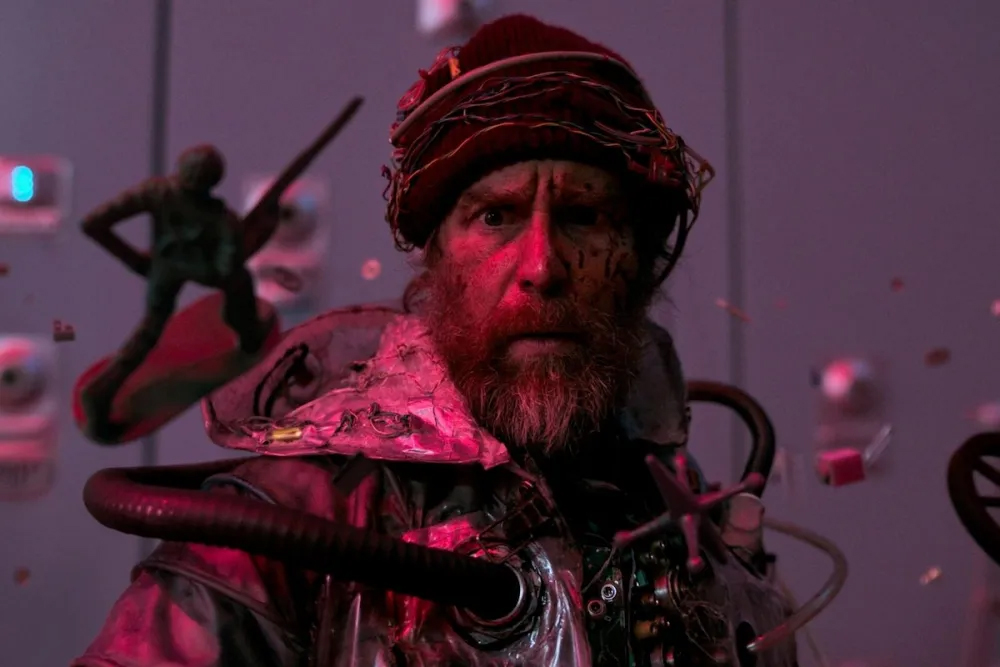
“Good Luck” marks the return of Verbinski a full decade since his last feature, the magically mountainous cult classic “A Cure For Wellness.” This time, he’s teamed with screenwriter Matthew Robinson (“The Invention of Lying,” “Love and Monsters”) and Sam Rockwell, who stars as a gonzo Man from the Future who drafts a group of diner patrons for his mission to sandbag a rogue AI (it’s his 117th attempt).
Verbinski, unsurprisingly, is no fan of generative AI. “It’s ingesting all this stuff on the internet, and spitting it out so exponentially fast,” he said in a recent interview with Discussing Film. “So now, it’s starting to drink its own piss.”
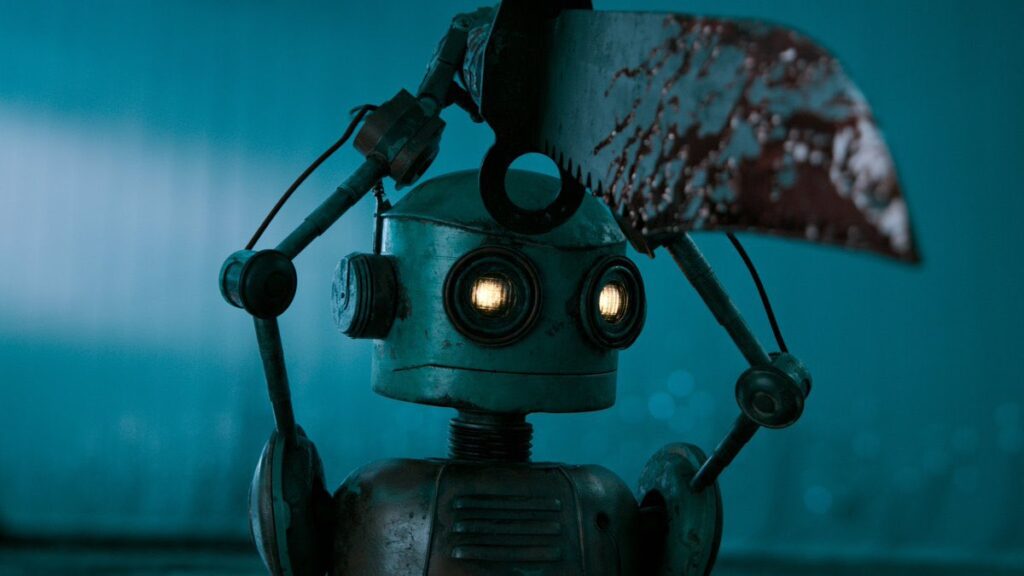
That’s more or less what happens in “Good Luck,” which recalls the cyber-dystopias of “The Terminator” (1984) and “Everything Everywhere All At Once” (2022), but with a dumpster-dive costume aesthetic—plus randomly generated threats (a.k.a. “shitty prompts”) and choruses shouting the film’s title like they’re auditioning for a Muse song.
Though it’s unlikely to have directly influenced Verbinski’s film, Zach Cregger’s “Weapons” (2025) is an interesting point of comparison in terms of both structure and theme. Whereas “Weapons”—which has been widely interpreted as a metaphor for school shootings—wraps itself in dense layers of allegory, “Good Luck” is much more up front about the issues it’s addressing.
In Verbinski’s doomsday scenario, school shootings are so pervasive that whole industries, complete with government subsidies, have sprung up in response (but make no effort to prevent future massacres). The kids are not all right, and the adults seem powerless to save them in a world making less and less sense by the second. “Mindfucks,” bemoans the Man from the Future. “Mindfucks everywhere.”
Sadly, “Good Luck” relies a bit too much on its anything-goes energy, resulting in quite a few hand-waved, underdeveloped plot threads and distractingly cartoony visual effects. Verbinski made the “Pirates of the Caribbean” trilogy 20 years ago—with VFX still considered to be the gold standard today—yet now delivers a final battle that wouldn’t be out of place in an MCU film, stuck in a dark pit full of CGI monsters that don’t even try to look realistic.
(To quote CyFi from Neal Shusterman’s 2007 novel “Unwind” on the subject of Picasso: “if you paint wrong because that’s the best you can do, you [sic] just a chump. But you do it because you want to? Then you’re an artist.”)
By this point, Verbinski is a filmmaker of great gusto, unafraid of being the proverbial old man yelling at a cloud. He may be didactic, but in a film where techno-holic teenagers turn into feral monsters at their phones’ command, someone has to be.
The director’s humanist spirit informs the movie’s most memorable vignettes, from rent-a-princess Ingrid (Haley Lu Richardson) manifesting the rare condition of electromagnetic hypersensitivity to teachers and partners Mark (Michael Peña) and Janet (Zazie Beetz) banding together against a hive mind of AI-infected kids. Even the Man from the Future is a poignant figure despite his callous, even cruel devotion to his mission at the expense of his traveling companions.
Easily the biggest standout in the film, however, is Susan (Juno Temple). Recalling Winona Ryder on “Stranger Things” (down to the pale complexion and lank brunette hair), Susan is a clear-cut audience surrogate, reacting with well-placed motherly concern and discomfort to the movie’s most Orwellian turns.
Susan is also cinematic proof that AI can never replicate the human heart—especially not in any artistic form. As Verbinski knows, our souls need imperfection and sloppiness, a belief exemplified by the film’s bookend closeups of diner fare: coffee, pies, massive double burgers, and fries. The world of “Good Luck, Have Fun, Don’t Die” may be uncertain and scary, but there’s always comfort food in the right places.