Genre storytelling is unique in its ability to use horror, science-fiction, or fantasy to explore deeper truths about the human condition in ways both familiar and unexpected. George Orwell understood this well, laying out his observations on totalitarianism using the dystopian future of “Nineteen Eighty-Four” and, before that, the beast fable of “Animal Farm.”
Published in 1945, “Animal Farm” reimagined the Russian Revolution, the rise of Joseph Stalin, and the corruption of Bolshevism through the lens of a contemporary fairy tale. The novella remains a classic of Western literature and an eternally relevant treatise on the nature of despots and the people (or creatures) they rule.
That said, “Animal Farm” is also difficult to adapt, as the cynical tale and bleak ending seem out of place in a genre ostensibly meant for children. Not surprisingly, it has made the jump from page to screen three times, with each one falling short of the original’s brilliance in different ways, reflecting both the time and the people who made them.
What follows is a guide to the many filmic incarnations of “Animal Farm”—and the ways in which they’ve failed to live up to Orwell’s seminal work.
The First Animated One (dir. John Halas and Joy Batchelor, 1954)
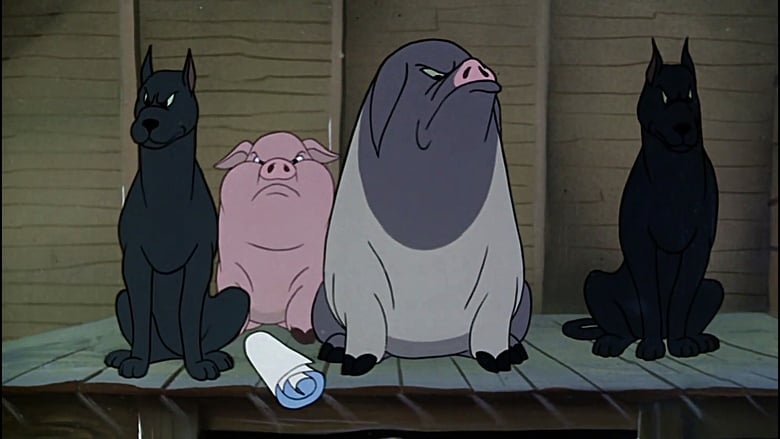
“Animal Farm”’s first adaptation was a 72-minute British animated special from the husband-and-wife team of Halas and Batchelor, who compressed the story and experimented with a lighter tone. The results are a mixed bag, but still get across Orwell’s themes and ideas—up until the ending derails it all.
The main drawback of the ’54 version is an awkwardness in the telling, despite genuinely impressive animation (fluid, expressive, and paired perfectly with Mátyás Seiber’s score) and a willingness to lean into the darker aspects of the story when called upon.
To the film’s detriment, the cast features only two voice actors: Gordon Heath, who narrates, and Maurice Denham, who voices the characters. Both put in fine work, but Heath’s narration is the engine that moves the plot, resulting in an experience more akin to hearing the book read aloud than watching a story play out.
More contentious is the film’s conclusion, which upends Orwell’s misanthropic tone. Here, the downtrodden citizens of Animal Farm learn that Comrade Napoleon, the allegorical proxy for Joseph Stalin, is coordinating with other pigs so that they too may stage corrupt Animalist revolutions. Fed up with Napoleon’s lies and greed, the animals overthrow him for good, stopping the spread of Animalism before it can begin.
Orwell’s goal with “Animal Farm” was to outline and condemn totalitarianism, regardless of the political ideology backing it. He saw the differences between the diametrically opposed Stalin and Adolf Hitler as superficial at best.
That perspective is distorted by the ‘54 adaptation, which reduces Orwell’s concepts to simplistic anti-communism. Which makes sense when you learn that, unbeknownst to Halas and Batchelor, the film was partially funded by the CIA as Cold War propaganda under the direction of E. Howard Hunt.
(You may be familiar with Hunt’s involvement in the Guatemalan coup or the Bay of Pigs invasion—or his side gig writing spy and detective novels. Or, more likely, his role as a mastermind behind the Watergate Hotel break-in that led to the disgrace and resignation of President Nixon.)
“Animal Farm” ’54 was a box office bomb upon release, taking 15 years to turn a profit. However, it found new life as a fixture of classroom screenings, giving generations of children their first taste of Orwell’s timeless tale.
The Live-Action One (dir. John Stephenson, 1999)
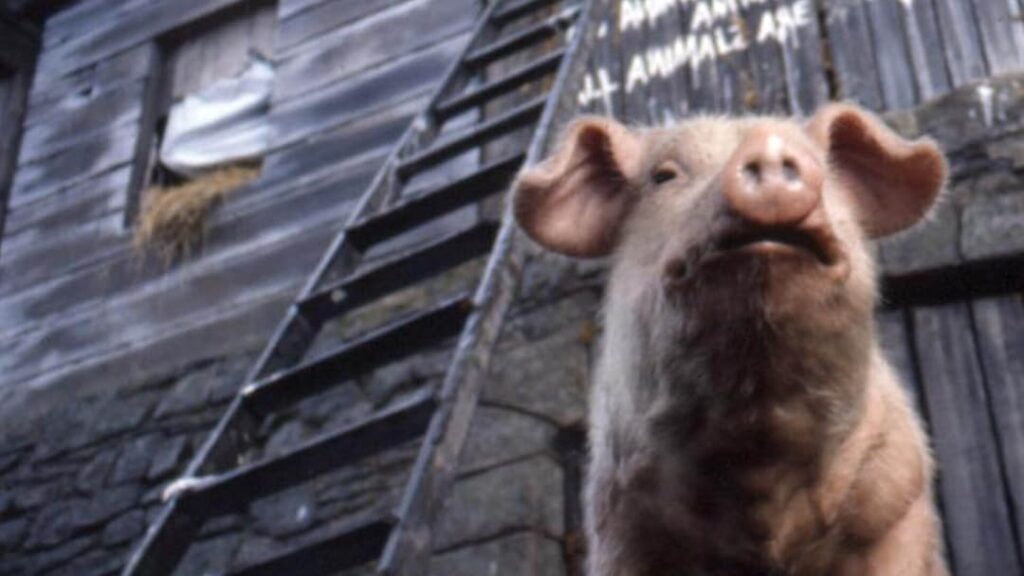
In 1995, “Babe” was released in theaters. The film, about a farm pig searching for purpose beyond becoming dinner, was a hit with critics and audiences, showing that movies with anthropomorphic animals could be evocative and compelling, even in live action.
That thought process seems to have been the biggest influence on “Animal Farm”’s second adaptation, a made-for-TV movie that attempts to copy the deceptive simplicity of the “Babe” aesthetic. It boasts a beefier budget and an all-star voice cast (Patrick Stewart, Ian Holm, Kelsey Grammer, Paul Scofield), yet still falls short of the standard set by Orwell.
This time, the animals are animatronics (animaltronics?) built by Jim Henson’s Creature Shop—and, for the most part, they are genuine marvels of practical effects. That makes it all the more frustrating that the film often augments their movements with tacky late-’90’s CGI, dragging the viewer kicking and screaming through the uncanny valley.
Combined with John Stephenson’s eye for melodrama, this turns moments of tension and heartbreak into accidental hilarity. Behold, for instance, the horrors of Napoleon’s ultimate triumph and try not to laugh:
Additionally, the ending is changed (albeit less egregiously this time). As narrated by Jessie (Julia Ormond), a border collie promoted to the role of audience surrogate for the film, Napoleon’s reign eventually crumbles on its own, reflecting the end of the Cold War and the dissolution of the Soviet Union in 1991. This allows the animals who fled the farm to return, striving to rebuild and not repeat the mistakes of the past.
While less galling than the CIA revising the central thesis of the book, this rethink is still more hopeful than Orwell might have preferred. That, combined with the poorly aged visual effects, holds back the ’99 version from greatness—even if, in the long run, it’s probably the best adaptation of the book we’ve seen so far.
The Second Animated One (dir. Andy Serkis, 2025)
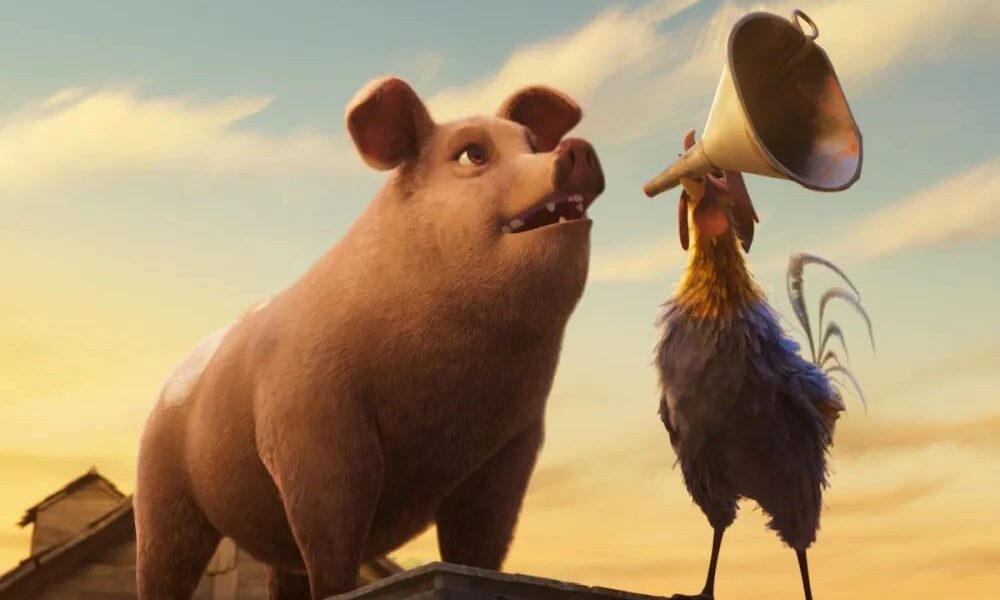
Another animated “Animal Farm” was announced back in 2011, but development on the project dragged on so long that original director Rupert Wyatt departed, handing the reins to his “Rise of the Planet of the Apes” (2011) muse, Andy Serkis (the performance-capture maestro who embodied Caesar, Gollum, and King Kong).
Serkis’ “Animal Farm” eventually crossed the finish line in 2024, premiering at Annecy International a year later and getting a wide release a year after that. Given the many delays and revisions the film was subject to, it’s no surprise that the final product is, to say the least, lacking.
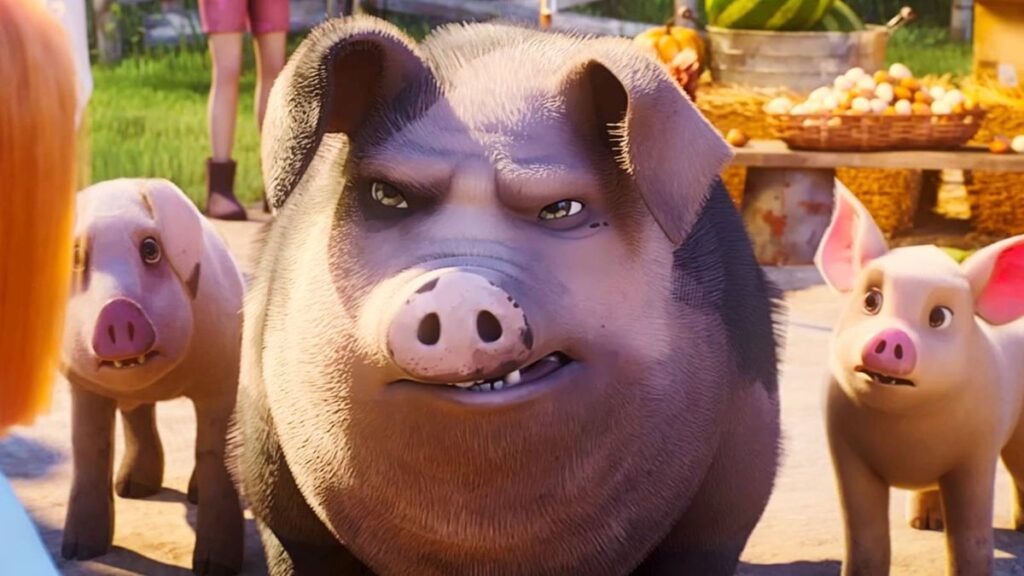
Serkis and screenwriter Nicholas Stoller sought to update “Animal Farm” for a 21st Century audience (their stance is more anti-capitalist than anti-tyranny). Thus, Seth Rogen’s take on Napoleon is closer to Donald Trump than Stalin: a loudmouth, status-obsessed bully who uses faux-populist rhetoric to distract from his own conspicuous consumption.
(Meanwhile, Napoleon’s business partner, the Glenn Close-voiced Frieda Pilkington, is reimagined as the head of a futuristic factory farming operation, mirroring opportunistic tech billionaires like Jeff Bezos and Elon Musk.)
This update isn’t a terrible idea, considering that Orwell may well have anticipated the MAGA movement. The problem, however, isn’t the film’s politics, but its script (which is a feast of sophomoric, underwritten pablum stuffed with bad jokes and cloying sentiment that belong nowhere near a story this pessimistic).
Once again, the ending is upended when the animals—led by newly created POV character Lucky (Gaten Matarazzo)—overthrow Napoleon and vow to build a better world on the ashes of the old one. It’s the nightmare vision of what a Disneyfied version of “Animal Farm” would look like (with animation that is so-so at best).
Perhaps “Animal Farm” isn’t built for adaptation, since the story’s tone and genre are at odds with each other (ironically, the failures of the filmmakers who have tackled it prove how singular and memorable the novella itself actually is). Regardless, someone is bound to adapt the great work once more—and we can only pray that, unlike Serkis, they don’t attempt to square the circle.