If you want to know why people read books about movies, read Nicholas Meyer’s 2009 memoir “A View From the Bridge,” in which he attends a party where Louis Malle slices cakes into myriad shapes: squares, triangles, parallelograms.
“How come you’re cutting the cake like that?” Meyer, the director of “Star Trek II: The Wrath of Khan” (1982), asks Malle, the director of “My Dinner With Andre” (1981). “Well, this way everyone can have the size and shape that they want,” Malle replies, leaving Meyer despondent and stunned.
“I realized that I would never cut the cake like that, nor do anything so profoundly original, as long as I lived,” Meyer mourns. Yet in time, he found solace in his ability to recognize Malle’s act of genius: “I did understand its significance at the time and preserved it in my memory; I am relating it to you now.”
If I didn’t know better, I’d suspect that those were the words of a film critic, not a filmmaker. To review a work of art, after all, is to be tasked not with creation, but with recognition—to be an observant Wallace to a pontificating Andre, a shrewd Kirk to a combustible Khan.
In recent months, three very different writers have managed that feat, capturing the court intrigue of Hollywood in cinematic prose. One was a buoyant producer; one is a ruminative critic; and one is a Canadian reviewer enthralled by a rubber-burning American franchise (albeit one whose most famous line is, “Salud, mi familia!”).
Not all of these books are of equal stature (one, in particular, was caught unawares by the swift tide of current events). Nevertheless, all three are reminders that a great writer can transform the recognition of genius into genius itself.
“The Bigger Picture” by Jon Landau
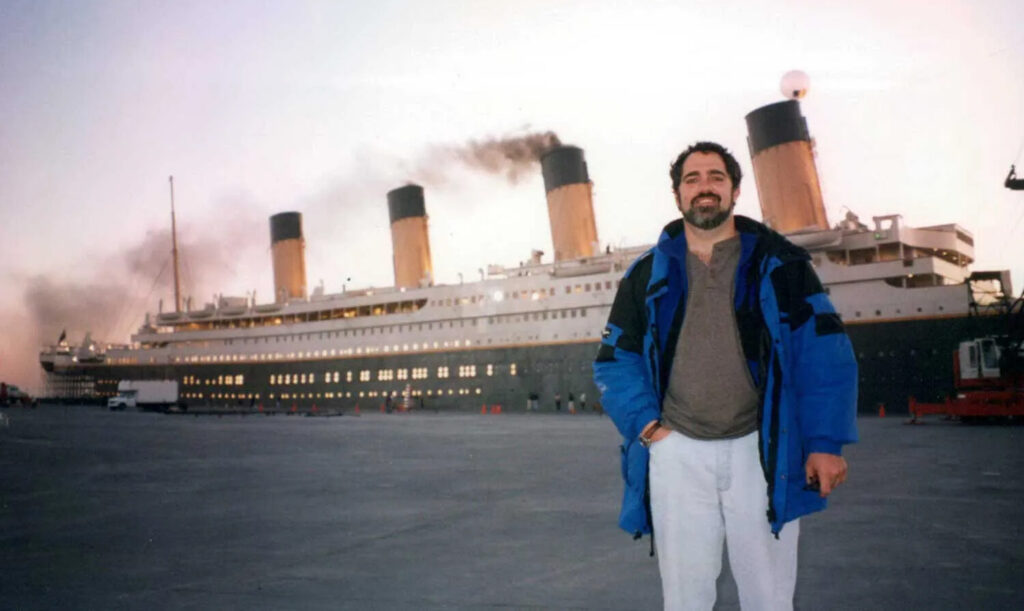
As James Cameron’s aide de camp, Jon Landau produced three of the top five highest-grossing movies of all time: “Titanic” (1997), “Avatar” (2009), and “Avatar: The Way of Water” (2022). Or, as Landau liked to say, three of the top four.
“I can sense the potential for an epic and understand the importance of a third-act epiphany,” he writes in “The Bigger Picture” (Hyperion Avenue, 272 pages, $28.99), his witty, humane, and, sadly, posthumous memoir. “And maybe that’s why I see such narrative possibilities in my own stroke of bad luck.”
The bad luck Landau refers to began in 2023, when he was diagnosed with esophageal cancer. It wasn’t his first reckoning with mortality (he was born in 1960 with a bad heart, bad lungs, and “a fifty-fifty shot at survival”), but he wrote “The Bigger Picture” because he knew it could be his last.
“I realized this undertaking was not just for the next generation but also for myself,” Landau writes. It is also, implicitly, for cinephiles hungry for harrowing tales of handling persnickety auteurs like Cameron, Warren Beatty, and Michael Mann (though Landau is repulsed by the suggestion that as a producer, his job was to “handle” great directors).
Given Cameron’s gleeful self-mythologizing, there’s little that Landau can say about “Titanic” and “Avatar” that their creator hasn’t already bellowed. Landau wasn’t the King of the World; he was the good-humored power behind the throne, even as he led an intensely jovial life beyond the palace walls.
“An easily embarrassed person could probably not stand life with me,” Landau confesses. No one, it seems, could escape his gregariousness—not the Twentieth Century Fox employees he took whitewater rafting, not the victims of his notorious practical jokes, and not the Cape Cod waitress he once asked for restaurant recommendations.
“Why ask a server if there is another restaurant better than her own?” Landau recalls his wife, Julie, asking. “What’s the point?” The point, Landau insists, was to fulfill his insatiable need for human connection, which could be vexing and endearing.
Though Landau died in 2024, “The Bigger Picture” ensures that he will go on communing with strangers. They will know that as a boy, he spent a Thanksgiving at Coretta Scott King’s home; that he was a virgin when Julie first sat on his lap; that he was so horrified at seeing his high school classmates get “stupid drunk” that he vowed never to drink himself.
“The sight of these normally good people changing personalities under the influence, becoming aggressive, careless, and even mean, really bothered me,” Landau writes. He vowed not to drink and never did, despite the sprawling wine collection he eventually amassed at Bali Hai, his estate located between Miami and Key West.
“Blowing someone away with a particular bottle—I just love that,” Landau enthuses. On and off the set, he dedicated his life to the pleasure of others. Even pleasures he wouldn’t be able to enjoy.
“The Greengrass Papers” by Tom Shone
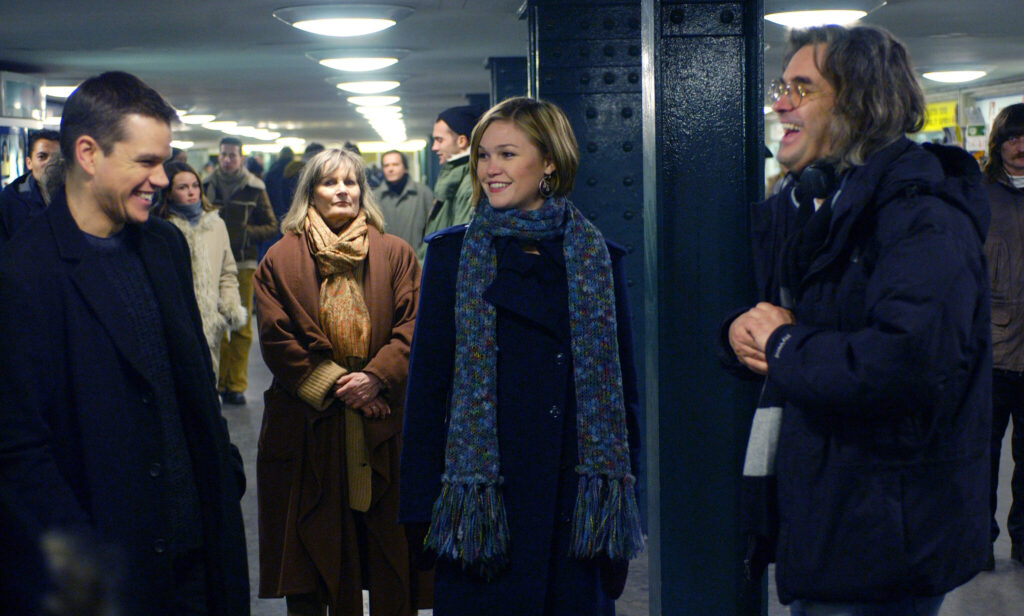
When I was 16 years old, I became obsessed with the wrenching scene in “The Bourne Supremacy” (2004) where Jason Bourne (Matt Damon) humbles himself before Irena Neski (Oksana Akinshina), the daughter of his first two targets.
“I would want to know that my mother didn’t kill my father,” Bourne says shakily. “That she didn’t kill herself.” So he tells Irena the truth: At the behest of the CIA, he shot and killed her parents, creating a mirage of a murder-suicide that ultimately filled him with soul-deep remorse.
“I’m sorry,” Bourne tells Irena, before limping out of her apartment outside Moscow and into the snow. He doesn’t confess because he craves absolution; he confesses because his conscience demands it, because he owes it to Irena, and because he’s strong enough to bear the weight of his guilt.
That strength, I decided as a teenager, is what makes a real man. And so, it was inevitable that I’d become curious about the man who made “The Bourne Supremacy”: Paul Greengrass, the British filmmaker and journalist profiled with taxonomic flair in Tom Shone’s “The Greengrass Papers” (Faber & Faber, 448 pages, $45).
“Working at the porous boundary between fact and fiction, he makes feature films that have the urgency and immediacy of good journalism,” Shone writes. That includes Greengrass’ “Bourne” films, which reverberate with both stadium showmanship and post-9/11 paranoia.
“We’re bringing you in, Jason,” former CIA director Michael Hayden joked to Damon when he visited the set of “Jason Bourne” (2016). I’m betting he wouldn’t have been so cavalier if he’d grasped the seriousness of the films’ allusions to the War on Terror—or been fully acquainted with Greengrass’ heroic muckraking in “Spycatcher,” the 1987 tell-all book about MI5 that alarmed then-Prime Minister Margaret Thatcher.
“Taking on Mrs. Thatcher was a business,” Greengrass told Shone. It was also, arguably, a dress rehearsal for Hollywood, where Greengrass was more than prepared to defy strong-willed storytellers like “Bourne” screenwriter Tony Gilroy (who is of formidable mettle, but is no Iron Lady).
In the public battle of “Bourne” sins, Gilroy cast his share of stones, excoriating Greengrass for dramatically revising the “Supremacy” screenplay. This, Gilroy insisted, was no mere matter of creative differences; to him, Greengrass’ alterations were “a crime against the gods of storytelling.”
“You’re fucking this thing up, and you don’t even realize it!” Gilroy raged at Greengrass during pre-production. Yet according to Shone, it was Gilroy who nearly fucked up “Supremacy,” writing a self-consciously clever screenplay that had to be rewritten in less than a week (by Brian Helgeland, who won an Oscar for “L.A. Confidential”).
Greengrass’ desire to triumph over an adversary and deal with him honorably is just one of many nuances in “The Greengrass Papers.” It’s the story of a troublemaker who found purpose as a journalist, yet was likely inspired more by Robert Redford than Bob Woodward; who has thrived on chaotic sets, even when they nearly drove him mad; who stood up to Gilroy, then implored him to reconcile.
“Hopefully one day we can do it with a laugh over a bottle or two of red, but maybe we can agree on this: that we were both young and hungry back in the day,” Greengrass wrote to Gilroy in an email (which never received a reply).
Personally, I suspect that the truth of what happened lies somewhere between Gilroy and Greengrass’ recollections, but I’m grateful that “The Greengrass Papers” confirms what I’ve always believed: Whether he’s making movies or chasing leads, Paul Greengrass is as real a man as can be.
“Welcome to the Family” by Barry Hertz
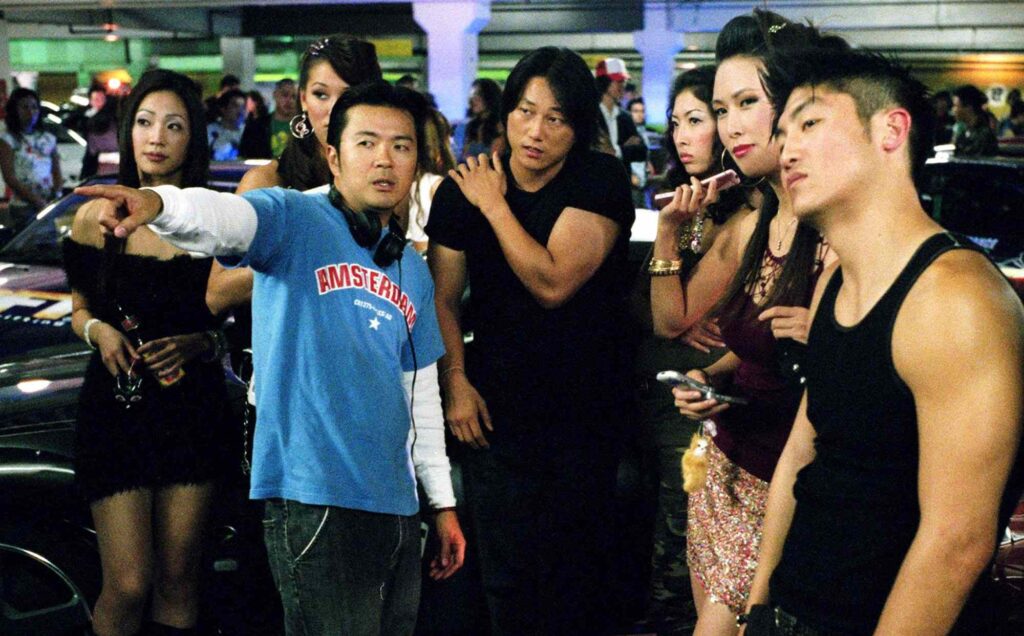
In 2011, martial arts maestro Sonny Chiba called acting in Quentin Tarantino’s “Kill Bill” films a “wonderful” experience—not quite what he indicated to Sung Kang and Jason Tobin, his co-stars in “The Fast and the Furious: Tokyo Drift” (2006), and the film’s director, Justin Lin.
“He was just shouting at Justin, telling him how much better a director he is than Tarantino,” Tobin says in Barry Hertz’s “Welcome to the Family” (Grand Central Publishing, 448 pages, $30), recalling a harrowing karaoke night during a break from filming in Tokyo. “Eventually, it was just me, Sonny, and Sung, five thirty in the morning, singing ‘Hotel California.’”
To that, I say: This could be heaven, because it’s definitely not hell. Hertz may not have had me in mind when he decided to add a quote putting down Tarantino to pump up Lin to his history of the “Fast”-chise, but the result is a book that seems genetically engineered to make me murmur (à la Daniel Craig), “Yes. Considerably.”
Lin was not the first filmmaker to direct a “Fast & Furious” film (and thanks to a clash with Vin Diesel, who plays street-racing paterfamilias Dominic Toretto, he won’t be the last). Yet it is his sensibility—the jubilant ridiculousness, the defiant sentimentality, the sly bursts of class warfare—that has powered this silly series past more checkered flags than it deserved.
“The white-knuckle saga of the Torretto clan began its life as a relatively grounded thriller about honor among thieves, all hard-scrabble LA grit and smoldering SoCal bromance,” Hertz writes. That changed irrevocably with “Tokyo Drift,” which is filled with scenes blissfully stolen by Han (Kang), the Korean-American speedster who transforms his garage into an apparent commune for hard-luck gearheads.
“A ‘Fast’ movie can be whatever its director wants it to be, as long as they remember to break the speed limit every now and then,” Hertz notes, whisking you back to the rambunctious era when making a “Fast & Furious” sequel that was good felt like getting away with something (before the series was burdened with endless airborne vehicles and box office sovereignty).
In telling that story, Hertz got ahead of his subject. Before “Welcome to the Family” was published, Diesel was accused of sexually assaulting an assistant in Atlanta, Georgia, and the purportedly final “Fast & Furious” was in limbo; months later, a lawsuit against Diesel was dismissed (on the grounds that California law does not apply in Georgia) and “Fast Forever” was greenlit for a 2028 release.
Ideally, “Welcome to the Family” would have aligned with the premiere of “Fast Forever,” but “Fast & Furious” has never been ideal. It is, after all, the series so hilariously disordered that chronologically speaking, its third installment is actually its seventh—thanks to Lin’s byzantine efforts resurrect Han after his heroically impermanent demise in “Tokyo Drift.”
“It was Han, after all, whom the entire ‘Fast’ timeline bent around,” Hertz writes. “And it was Han’s story that kept Lin attached to the series following ‘Tokyo Drift.’” That’s probably because Han originated not in “Fast & Furious,” but in “Better Luck Tomorrow” (2002), Lin’s feature-length middle finger to the “model minority” myth.
I like to think of Han as a talisman that kept the Lin who directed “Better Luck Tomorrow” alive as he descended into the maze of Hollywood’s franchise industrial complex. He may not have reshaped the labyrinth, but he did valiantly attempt to rebuild it from the inside—one character and one culturally specific flourish at a time.
“With his insatiable hunger for risk, fierce dedication to authenticity, and damn near superhuman work ethic, Lin arrived in Japan as a cinematic force to be reckoned with,” Hertz proselytizes. “He would leave as a new kind of Hollywood power player: the progressive heir to the blockbuster throne.” And, most importantly, a director worthy of being shouted at by Sonny Chiba.