
At the start of Ridley Scott’s “The Dog Stars,” a pilot named Hig (Jacob Elordi) flies his yellow Cessna airplane from Erie to Denver, silently gliding over verdant forests and imperious mountains. Perhaps he’s a lonely rancher, hungry for the communal chaos of a sprawling metropolis.
Alas, the truth is more harrowing. As Hig descends into the Mile High City, we see the telltale signs of dystopia: a basketball commercial without an audience, a Pizza Hut that sold its last Tavern-Style Double Pepperoni long ago, and a chilling lack of human life (save for a crossbow-wielding Ewen Bremner).
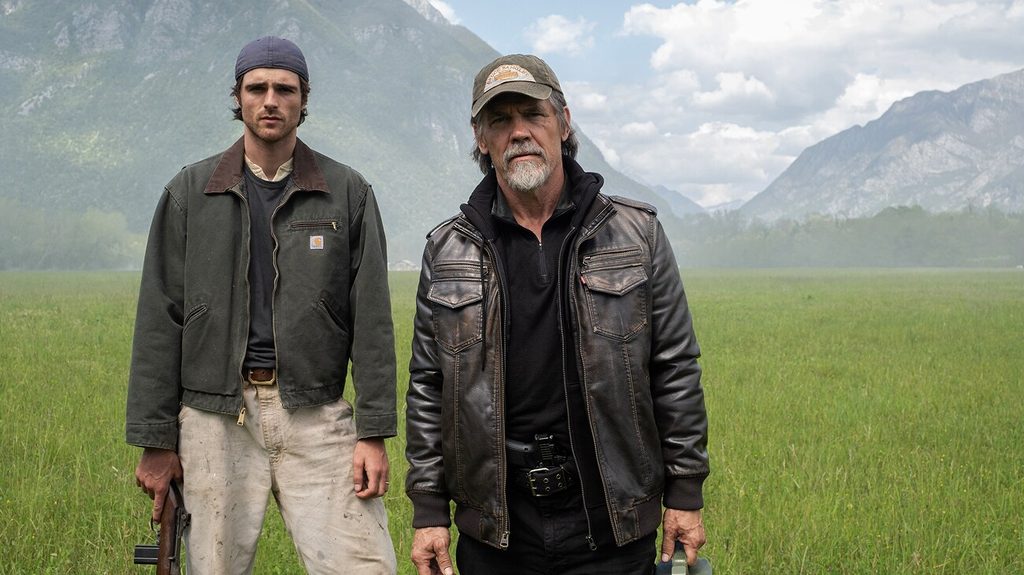
“Wake up,” Hig says bitterly. “Defend. Survive.” Reduced to merely existing, he has become a stargazing, occassionally suicidal dreamer, dependent on allies like Bangley, a grouchy survivalist (played by Josh Brolin), and Jasper, a Belgian Malinois (played by Raksha, who prefers belly rubs to actorly nuance).
Of all the bleak futures Scott has manifested, this one may be the bleakest (the film is based on a 2012 novel by Peter Heller). The cyberpunk gloom of “Blade Runner” (1982)? That was a darkly stylish fantasy compared to topical tensions of “The Dog Stars,” which is a queasily familiar saga of humanity struggling on in the wake of a contagion referred as “the flu” or “the virus.”
“What do you expect to find?” Bangley mockingly asks Hig, who begins to venture further and further from their grungy compound. “Happy people everywhere?” Absurd as it may be, the only thing keeping Hig from ramming his plane into a mountain in Telluride is the dimming hope that if happy people aren’t everywhere, they are at least somewhere.
It’s easy to imagine the Scott who birthed the sado-futuristic “Alien” (1979) chewing Hig up and spitting him into the vacuum of space—or at least showing more interest in Bangley’s ongoing battle with tattooed bandits called Reapers (who appear to have graduated from the same post-apocalyptic finishing school as the feral War Boys in “Mad Max: Fury Road”).
“About time, motherfuckers,” Bangley growls as Reapers converge. Despite the gravity of Elordi’s melancholy, Brolin’s macho theatrics become irresistible when he opens fire after dark, his night-vision goggles making good on Scott’s famous self-assessment (“I’ve got a good eye”) by turning each flash of blood emerald green.
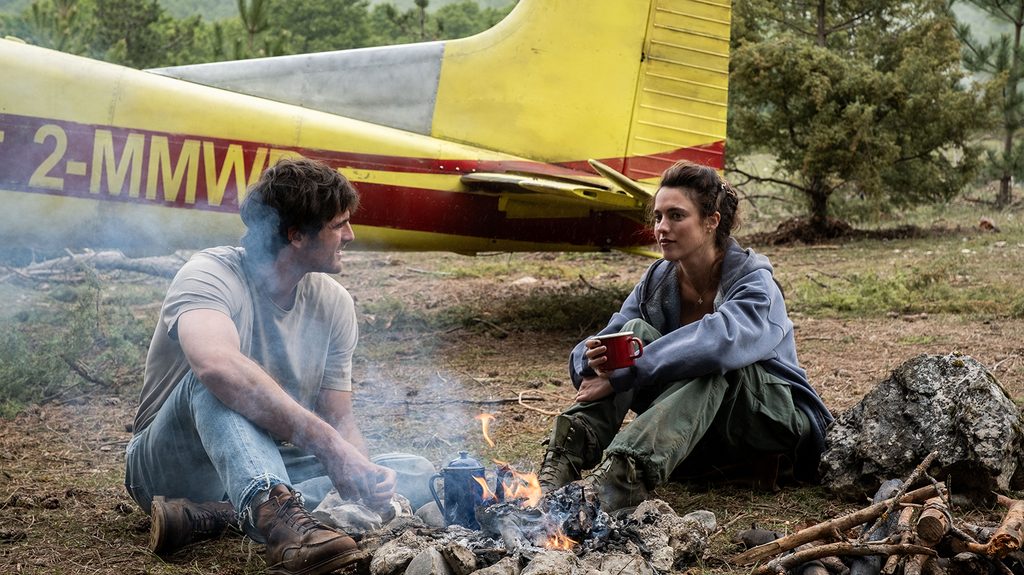
While Scott clearly relishes the pragmatism that hardens Bangley into a badass, he covets the optimism that spurs Hig into the arms of Cima (Margaret Qualley), a farmer delighted to encounter a 6’ 5” single male in the wasteland. (Judging by “The Dog Stars,” finding a soulmate in 2035 is slightly easier than getting a match on Hinge today.)
“Is this okay?” Cima asks Hig as she gently places a hand on his body. Like him, she has lost not only a world, but a spouse—and must re-learn the art of being physically (and emotionally) close to another person. “Gotta have something to haunt you, right?” she says. “Otherwise, you might get lonely.”
Haunted and lonely, Hig makes frequent, futile returns to the home in Denver that he shared with his wife (Sai Bennett, a serene apparition throughout). He can carefully make the bed and painstaking prop up a guitar next to the piano, but he can’t resurrect his pre-pandemic life. Gradually, agonizingly, he learns not to want to.
“There’s gotta be something better than this,” Hig insists. “Better,” he realizes, isn’t clinging to dusty possessions; it’s rebuilding with the wreckage at hand, as Cima’s father, Jack (Guy Pearce), does when he shows Hig how to properly saw through a tree trunk to clear a makeshift runway for his plane.
A master of heartfelt hokum, Scott doesn’t seem worried about moviegoers snickering at the spectacle of a grieving young man being healed by manual labor. Why should he be? Now 88, he’s become refreshingly comfortable with his sentimental tendencies, whether they be musical (Hozier’s “Like Real People Do” on the soundtrack) or visual (Bangley dancing half-naked, reveling in an improbable victory).
“I hate the word retirement; it sounds like a death sentence,” Scott recently told FQ Magazine. “I despise the idea of quitting; I’ll stay active as long as I’m healthy.” To his (many) detractors, that may have sounded like a threat. To me, it sounded like a promise that a poignantly restless artist hasn’t finished reinventing himself yet.


One Response