
When Alejandro G. Iñárritu directed “Amores Perros” (2000), he nearly drowned his audience in an ugly realism—bloodied heads, skittering rats, mangled dogs—that he would later refute in “Birdman or (The Unexpected Virtue of Ignorance)” (2014), a backstage comedy that mocked the heedless pursuit of verisimilitude.
“Does anybody give a shit about the truth other than me?” moronic stage actor Mike Shiner (Edward Norton) howls at his co-star, Riggan “Birdman” Thomson (Michael Keaton). “This set is fake, the bananas are fake. There’s nothing in this milk carton!” Perhaps Iñárritu realized that in a medium as beautifully artificial as cinema, there’s truth to be found in empty cartons.
If “Birdman” was a testament to that theory, “Digger”—Iñárritu’s first feature since “Bardo, False Chronicle of a Handful of Truths” (2022)—is a test of it that dares you to bail at every genre-combusting turn. Is the film a Strangelovian satire? Ja. Is it a show business farce? Bingo. Is it a dystopian sci-fi romance between art and the apocalypse? Just wait until the end credits.
“If we can’t control the course of nature, at least we can control the narrative,” declares Digger Rockwell (Tom Cruise), an oil-drilling demagogue. That’s not just spin: “Digger” postulates that in a chaotic world, storytelling is humanity’s last, best hope of regaining clarity, if only for the running time of a film or a play. Which, in the case of “Digger,” leaves only 129 minutes.
For about a third of that time, “Digger” is as advertised: a tall (albeit terrifyingly plausible) tale of a 5’ 7” tycoon who discovers that his company has dislodged an ice shelf (nicknamed “Judy”) that is five times the size of Washington, DC—and threatens to smoosh much of the European Union.
“If Northern Europe gets screwed with its pants on, it’s not my problem!” President Compson (John Goodman) hysterically insists. “It is your problem, Mr. President,” Digger replies, a point emphasized by the tree that topples sideways at the conclusion of one of their conversations.

Considering that “Digger” is predicted to lose $250 million, I doubt I’ll darken the film’s fortunes meaningfully by revealing that this is no ordinary tree. It is, in fact, a miniature model in the background of “Fossil Fools,” a play staged by a “hip” director named Hannah (Sophie Wilde) long after the environmental crises that the real Digger uncorked.
“They have to be able to laugh at it, Curtis!” Hannah insists as her contrarian star, Curtis Markson (also Cruise), becomes increasingly defensive of his character. Yes, Digger slathered the world in fearsome floods and nuclear waste, but what’s the point of Curtis’ actorly empathy if he doesn’t extend it to the undeserving?
If “Birdman” was about making theater, “Digger” has theater in its marrow. Scenes are stuffed with more dialogue than most screenwriting manuals would advise; Emmanuel Lubezki’s stately cinematography respectfully flirts with the proscenium arch; and the actors emote with the apparent goal of filling the Globe Theatre.
“I have cancer of the asshole!” Compson proclaims in one of several scenes broad enough to make even an IMAX screen seem like a claustrophobic cage. Some moviegoers may relish the spectacle of Goodman and the other players going from a relaxed growl to a full-throated roar; some may prefer to endure a dogfight from “Amores Perros” instead.
If Cruise fares the best of the cast, it’s because this is the first time since Doug Liman’s “American Made” (2017) that he has played a gravity-observant role: Not Digger, but Curtis, the harried thespian who stews in his dressing room, convinced that the real Digger was more “composed” than the cartoon antihero he’s been called to embody.
“Satire, farce, drama, tragedy—it doesn’t matter,” says Kenny (Jesse Plemons), a producer of “Fossil Fools,” as Curtis and Hannah debate the finer points of Digger. Kenny, it turns out, speaks from experience: He is Digger’s nephew and is himself a character in the play, balefully played by a young actor named Kyle (Teddy Hawley).
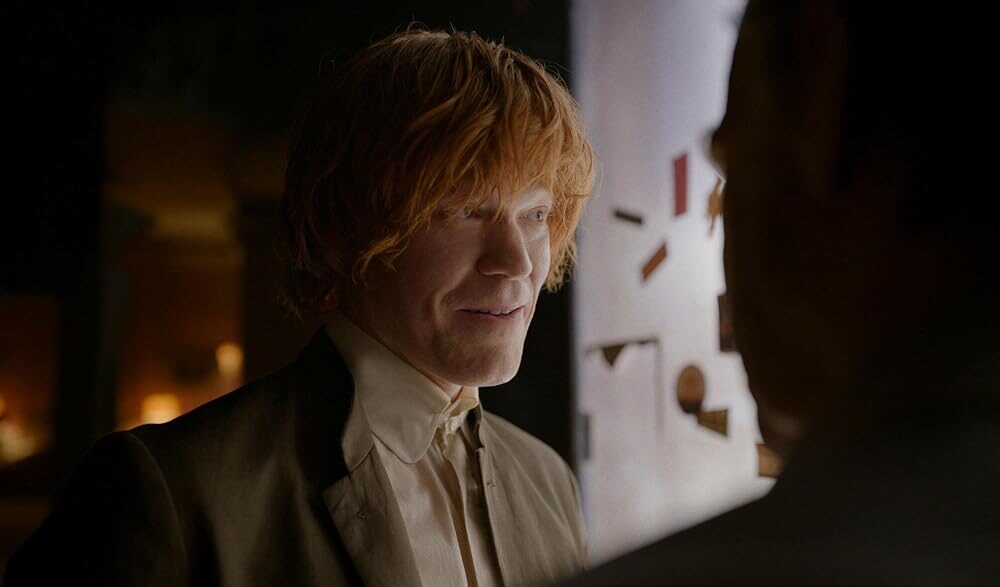
In a monologue that illuminates the majesty and folly of “Digger,” Kenny hints that “Fossil Fools” is a matter of familial obligation. He may not be able to liberate the waterlogged world that flowed from his uncle’s greed, but he can build a dam of cathartic chuckles, an act of penance as poignant as it is inadequate.
At the risk of impugning a patron of the arts, I have to ask: Does Kenny, a shifty financier with his own “global intelligence firm,” truly want to expose his uncle? Are his motives for tracking down Curtis’ missing daughter as purehearted as they appear? And is “Fossil Fools” anything more than the latest feat of Rockwellian hubris? I don’t buy it (especially since the play is a “cult classic” that Kenny has suspiciously co-opted).
“It’s hard not to conclude that Iñárritu’s alter egos, at least, possess thin skins, silver tongues and serious axes to grind,” A.O. Scott wrote in his review of “Bardo” in The New York Times. That may be so, but Iñárritu’s body of work is a persuasive reminder that the director with an axe is preferable to the one who refuses to pick up a weapon.
In “Digger,” Iñárritu sharpens an armory of narrative blades—wit, bravado, dexterity—as he attempts to cut the climate deniers who profit from “unsustainable lives” down to size. His sharpest sword, however, is the theater itself, one of the last remaining reservoirs of solace and sincerity in a post-Digger disaster zone.
“Everything changes, you know,” Digger muses sadly. “One day you’re a cat or a king. The next day, you’re just ashes in a box.” If he’s King Digger, the play’s the thing in which Iñárritu seeks to catch his conscience—and, hopefully, our own.