

The latest film directed by Steven Spielberg may be titled “Disclosure Day,” but it is not about a 24-hour period. Rather, it is about some future week when humanity will cast off a shroud of grievance and paranoia, heralding a halcyon dawn of wonderment and compassion. I hope.
As inevitable as the sharpness of Bruce the Shark’s teeth or the crack of Indiana Jones’ bullwhip, hope is deeply encoded into Spielberg’s cinematic DNA. Now 79, he has made films that stare into chasms of evil—slavery, genocide, war—yet still holds fast to his luminous belief in a better tomorrow.
“His ruthless optimism, while it has helped to make him an enormously successful showman, is also crucial to his identity as an artist, and is more complicated than many of his detractors realize,” A.O. Scott wrote in 2011. That identity is blissfully intact in “Disclosure Day,” which begins with a barbaric-looking wrestling match and ends with a single word: “Listen.”
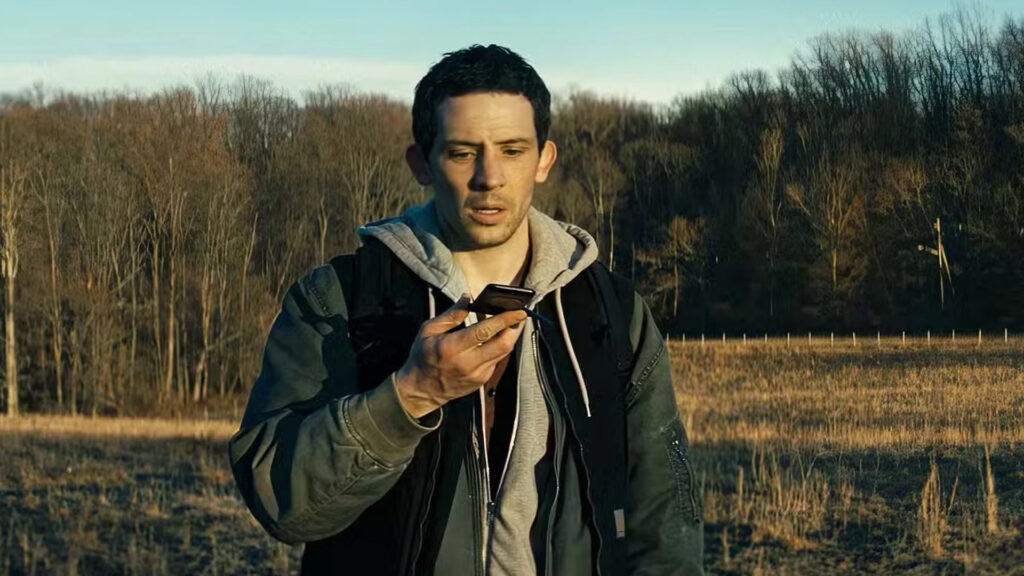
Watching real-life wrestlers Lance Archer and Brian Cage pummel each other in the opening scene, you may worry you’ve bought a ticket to the wrong movie (perhaps an unlikely sequel to Darren Aronofsky’s “The Wrestler”). But that fear dissipates with the casual reveal of Daniel Kellner (Josh O’Connor), a determined fugitive nestled among the amped-up spectators.
“What did you steal?” Jane (Eve Hewson), Daniel’s girlfriend, asks. His answer is explosively simple—evidence of brutalized alien visitors that is being hoarded by malevolent operatives—yet teasing enough to suggest that, like us, Daniel is thinking, This can’t be all there is to it.
Miles away, a similar current of unease courses through Margaret Fairchild (Emily Blunt), a Kansas City weather woman experiencing a day of uncanny connections: some lightly peculiar (making eye contact with a bold cardinal that has flown through her window), some thrillingly eerie (unnerving a belligerent cop by analyzing his love life).
“It’s like for a few seconds I am them,” Margaret says, struggling to explain her knack for seeing into people’s souls. From the moment she speaks those words, it is a foregone conclusion that her story and Daniel’s will converge, given his insight into the aliens and her insight into humanity (arguably a far more perplexing species).
For both characters, insight is a matter of communication. Daniel uses mathematics (“the book of the universe”) to comprehend the aliens’ language; Maragaret uses her telepathy (much as a musician plays an instrument, she says) to speak it.
For scholars of Spielberg lore, that dichotomy will stir memories of a tingly 1999 exchange between Spielberg and Inside the Actors Studio host James Lipton about “Close Encounters of the Third Kind” (1977).
Lipton: “Your father was a computer scientist, your mother was a musician. When the spaceship lands, how do they communicate?”
Spielberg: “That’s a very good question. I like that. You’ve answered the question!”
Lipton: “They make music on their computers and they are able to speak to each other.”
Spielberg: “You see, I’d love to say, ‘You know, I intended that and I realize that was my mother and father.’ But not until this moment!”
Autobiographical resonance aside, it can be wearying when movies fall back on stereotypically artistic, intuitive women and rigid, rational men (even Spielberg’s imagination has limits). Yet in “Disclosure Day,” these archetypes help illuminate a devotion to the transformative power of empathy, which the aliens share with UFO truther Hugo Wakefield (Colman Domingo).
“They regard empathy as an evolutionary advantage!” Hugo proclaims. Naturally, he speaks these words in a warehouse where he is presiding over what looks like a movie set, suggesting that he is a practitioner of Spielbergian craft: the engineering of an evolutionary advantage through emotional art.
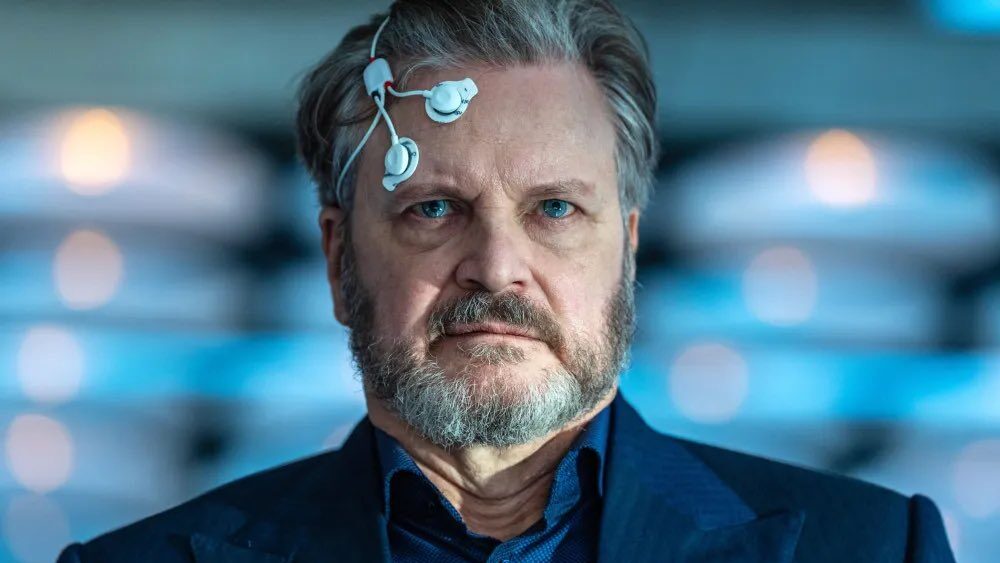
If Spielberg’s faith in cinema or humanity ever wavered, it doesn’t show. (“Movies build community,” he told The New York Times recently.) His optimism isn’t just ruthless; it’s relentless and unnecessarily defensive, given that the only nonbeliever of note in “Disclosure Day” is Noah Scanlon (Colin Firth), a cynical but barely menacing CEO.
“That truth will upend all established order across the entire world!” Noah snaps as he tries to stifle Daniel’s evidence of alien contact. I have to ask: If Noah is that passionate about said order, why doesn’t he fight harder to preserve it? And, more importantly, why doesn’t Spielberg stress-test his convictions against a more formidable antagonist?
At times, Spielberg’s niceness can be vaporous, suggesting a resistance to vigorous argument. (If you think about it, the villain of “E.T.” is Elliott’s inability to conceive that a grown-up could be both skeptical and kind.) It is also what makes his movies triumphantly aspirational, “Disclosure Day” included.
“I don’t think that you ever doubted your belief in God,” Sister Maura (Elizabeth Marvel) tells Jane, a former novitiate. “I think you lost your faith in people.” Whether or not Spielberg restores that faith, it is worth noting that “Disclosure Day” (along with Francis Ford Coppola’s “Megalopolis”) is one of the few recent American films to try.
In cinema, to try is to manifest. “Disclosure Day” may dream of a future where life beyond Earth reinvigorates life on Earth, but it is a future that echoes transformative moments from the past (the fall of the Berlin Wall, for one) when humanity staggered on the precipice of utopian possibilities at once imminent and tantalizing.
That, too, is a familiar sensation from previous Spielberg films, but it separates “Disclosure Day” from “Close Encounters,” in which cosmic voyagers beckoned Roy Neary (Richard Dreyfuss) to slip the surly bonds of Earth, not shatter them. “Monsieur Neary, I envy you,” Claude Lacombe (François Truffaut) told him wistfully, and no wonder: Claude, like most of humanity, was being left behind.
Personally, I don’t envy Roy Neary. (The dude abandoned his entire family!) I do, however, envy Daniel, Margaret, Jane, and all the other humans in “Disclosure Day” who get to begin building Spielberg’s better tomorrow. A tomorrow that, in the end, he has the grace to let us imagine.


One Response