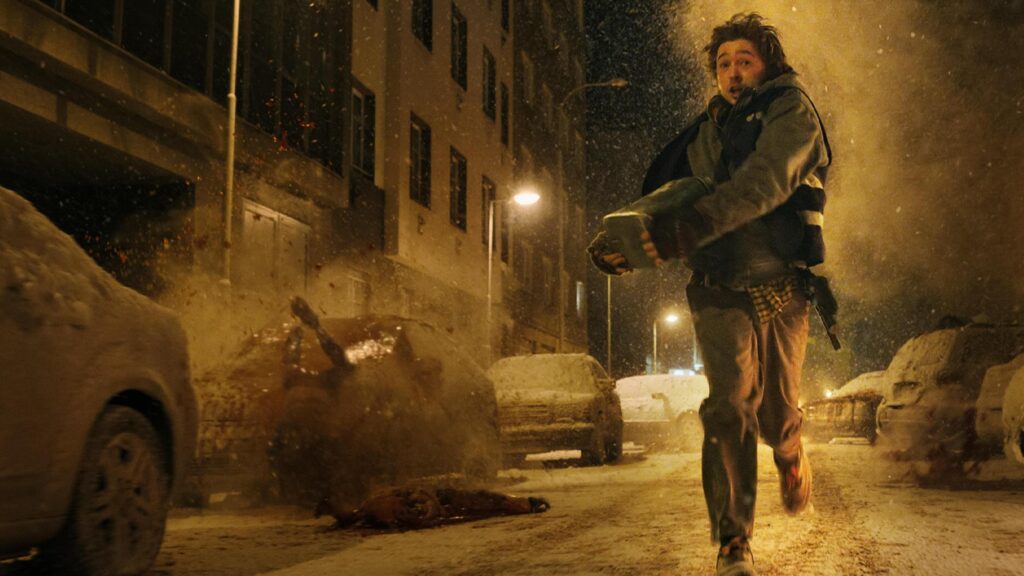
In our golden age of video game adaptations and horror blockbusters, it was only a matter of time before “Resident Evil” rose from the grave to menace moviegoers once more…but not that it would be revived by one of cinema’s biggest horror auteurs (who happens to be a gamer himself).
Since 2002, Capcom’s survival horror staple has enjoyed a fruitful relationship with Hollywood, boasting six major motion pictures built on writer-director Paul W. S. Anderson saying, “Look at how badass and sexy my wife is”—and star Milla Jovovich being precisely that badass and sexy. (The couple have been married since 2009.)
However, later installments have been dead on arrival, with the 2021 reboot film “Welcome to Raccoon City” and a 2022 Netflix series falling short of expectations. The franchise needed new blood, and found it in Zach Cregger, the former Whitest Kid U’ Know who directed the critically lauded “Barbarian” (2022) and the Oscar-winning “Weapons” (2025).
In Cregger’s inventive rethink, medical courier Bryan (Austin Abrams) accepts the risky job of delivering a package to Raccoon City amid a snowstorm. If that name rings any bells, you’ll be unsurprised to learn that his quest is soon waylaid by zombies, mutants, and the ever-present incompetence of the Umbrella Corporation.
Outside of those scant details, Cregger’s “Resident Evil” doesn’t pull many story elements from the games themselves. (There’s no team-up with Leon S. Kennedy or boss fight against the Nemesis waiting at the end of the road.) Instead, Cregger’s goal is to translate the experience of playing a survival horror game into filmic language—one that emphasizes isolation, desperation, and helplessness in the face of overwhelming terror.
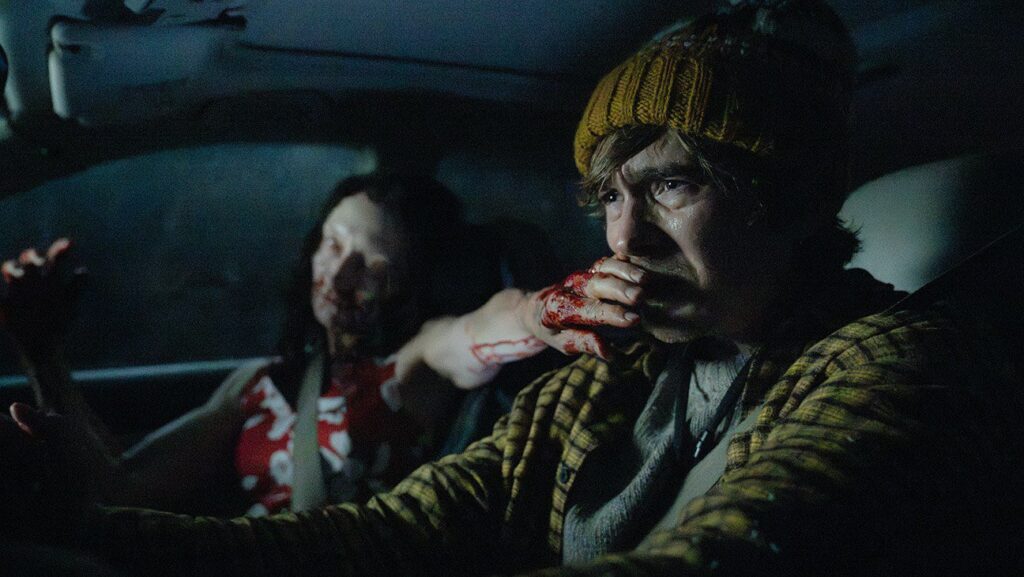
As Bryan runs from setpiece to bloody setpiece with little respite, his journey becomes one of constant forward motion, only stopping when he gets the chance to expand his meager arsenal. What few other characters he meets last only minutes of screentime before they die horrifically at the hands of a monster (or Bryan’s when they turn into a monster).
Most importantly, Bryan himself is ill-equipped to navigate a horror scenario. He’s not a gun-toting commando or hiding some latent T-virus superpower; he’s just an everyday schnook in way over his head. Cregger mines just as many laughs as he does screams from Bryan’s flailing attempts to survive, as his brute force approach to puzzle solving is more hindrance than help.
Throughout, there’s a recurring theme of dodging responsibility. (Bryan took the Raccoon City gig to avoid a difficult conversation with his pregnant girlfriend; the Umbrella scientists downplay their role in the zombie outbreak.) Still, Bryan’s will to live and clever improvisation lets him level up to basic competence—perhaps not the monster-killing mastery of Chris Redfield, but at least the defiant grit of Ethan Winters.
The biggest knock against “Resident Evil” is that its bleak ending doesn’t really offer any definitive moral beyond “That’s a bad thing to do.” After all, the bravest character in the film is Umbrella enforcer Maxine (Kali Reis)—and she bites it just as suddenly and unceremoniously as her meek partner, Paul (Paul Walter Hauser). When monsters roam the streets, the courageous die just as easily as the cowardly.
Still, that’s a minor quibble about the best “Resident Evil” movie yet (admittedly a low bar to clear, since the Anderson/Jovovich films were never exactly catnip to critics). Cregger seems more interested in following his own muse than playing the blockbuster game, but he’s crafted a tense, funny, and gruesome film that shows that this well-worn title still has some bite.