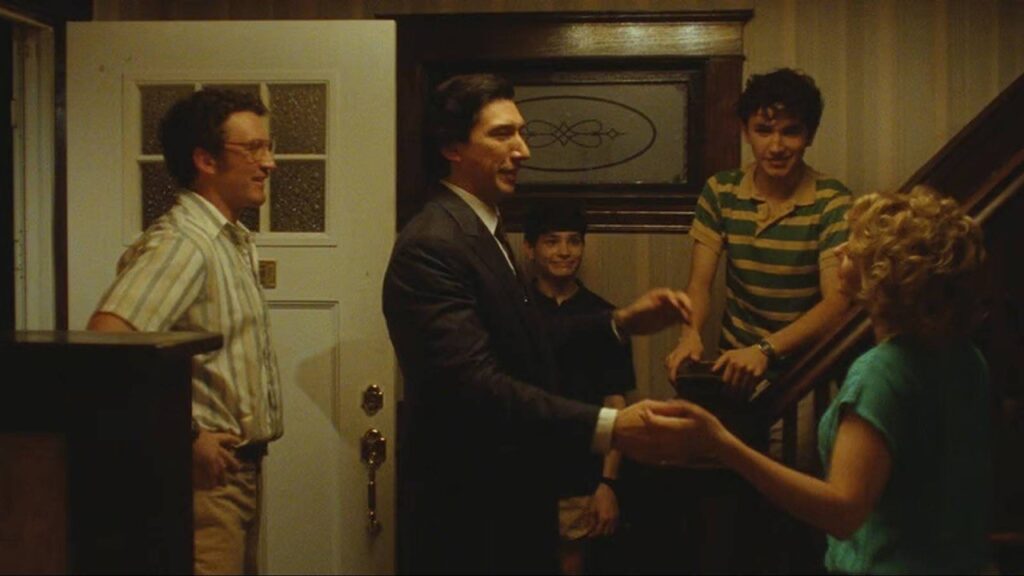
As a Russian-Jewish kid growing up in Queens, writer-director James Gray snuck into the Sutton Theater to see “Raging Bull” (1980)—and saw his own life reflected in Martin Scorsese’s ruthless portrait of Jake LaMotta (Robert De Niro), a son of Italian immigrants.
“I had never seen a movie where people talked like that—which was to say they talked like the people that lived down the street,” Gray said in 2019. “I mean, I know that’s not Russian immigrants. But…you can recognize the ethnographic honesty of it.” Cinematic empathy, he discovered, could both transcend and illuminate cultural specificity.
While Gray learned that lesson from Scorsese, I learned it from Gray. He and I may be divided by geography and ancestry (I’m a lifelong Oregonian with Scottish and Scandinavian roots), but you don’t have to be from Gray’s beloved Outer Boroughs to understand the tenderness, stubbornness, and impermanence of the families in his films.
“This was a bad night,” Irwin Pearl (Miles Teller) tells his sons, Scott and Ben (Gavin Goudey and Roman Engel), in Gray’s quasi-autobiographical new crime drama “Paper Tiger.” “Tomorrow will be better. I promise.” It is a vow fated to collide with the reality that all families—whether they are called Gray, Pearl, or any other name—are torn apart by time.
Set in 1986, “Paper Tiger” echoes two of the most formative moments in Gray’s life: his father being indicted on 56 counts of fraud and his mother dying of brain cancer. “In a very short time, my father had his legal troubles, my brother went to college, my mother died, and I went off to California,” Gray told The New Yorker. “Almost overnight, the family unit was destroyed.”
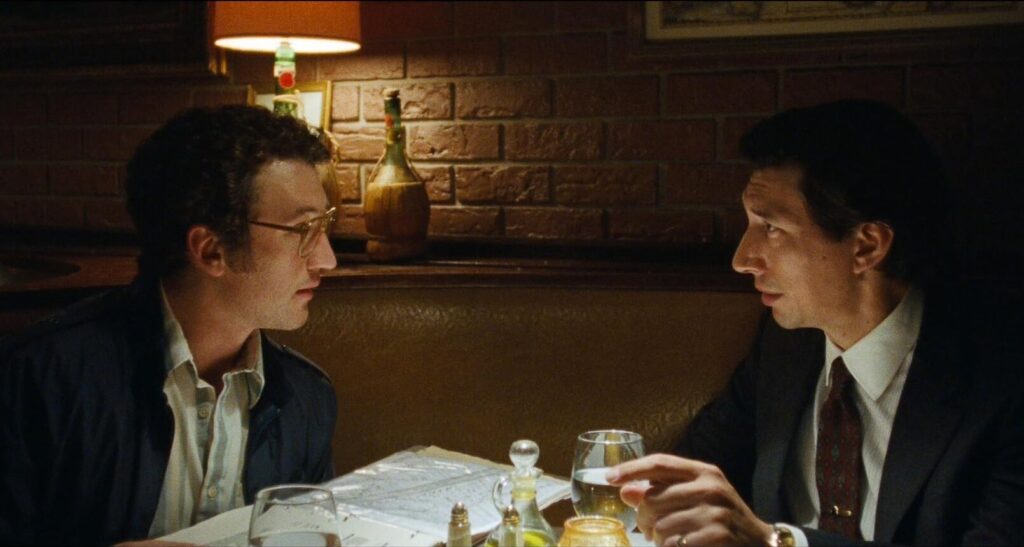
In “Paper Tiger,” the herald of familial destruction is Irwin’s brother, Gary (Adam Driver), who enlivens the Pearl household with his clownish grin, a van’s worth of Peter Luger steaks, and a seductively dubious business proposition for Irwin (who is fretting over the cost of college for Scott).
“You can be my lead engineer,” Gary tells Irwin, proposing that they consult on the cleansing of the oil-oozing Gowanus Canal. Given that the Environmental Protection Agency ordered a $369 million cleanup of the canal in 2024, Gary and Irwin’s crusade is almost comically doomed—by the fruitlessness of the gloopy task at hand, but also the involvement of the Russian mafia.
“My brother is a good man,” Gary insists after Irwin learns that the mob is illegally dumping oil. “He’s a kind person. He’s just not always what we call streetwise, if you understand what I mean.” A retired NYPD cop turned security consultant (clients include Port Authority and Macy’s), Gary believes he can charm and cajole his way out of any crisis, which makes him almost as naïve as Irwin.
For the mob, blackmailing Irwin is a means to a strategic end (Gary’s NYPD connections); for Gray, the mob is a means to a creative end (dramatizing the fall of the house of Pearl). He treats the Russian mafia, in other words, the same way he treated the love triangle in “Two Lovers” (2008) or the moon buggy chase in “Ad Astra” (2019): as a pulpy path to the juice of lived experience.
“I got a fucking army of cops behind me!” Gary bellows as he flogs the Russians with his belt. It’s a cathartically violent act (and a possible allusion to Gray’s allegedly abusive father), but the film’s strict humanism won’t permit the sensationalism of a cop cavalry entering the moody fray. Thus, when Gary makes his poetic last stand, he stands alone, dwarfed by a dense field of weeds taller than men.
If Gary’s lonely reckoning is modest compared to the blockbuster Floyd Bennett Field shootout in Gray’s “We Own the Night” (2007), so much the better. In “Paper Tiger,” there’s more care for character than spectacle—on Gary’s verdant battlefield, yes, but also the Pearl home front, where Irwin’s wife, Hester (Scarlett Johansson), comes to terms with an almost certainly terminal diagnosis.
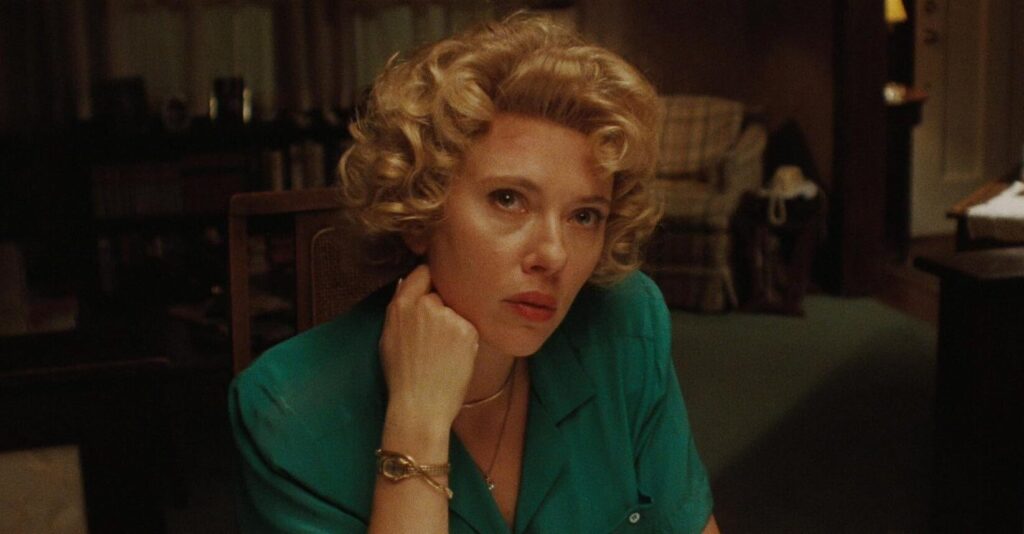
As I watched “Paper Tiger,” I waited for Hester to reveal her plight to Irwin. I was still waiting when the film ended, leaving just as many (if not more) truths unspoken as “Armageddon Time” (2022), Gray’s painfully well-etched portrait of a Gray-esque boy named Paul (Banks Repeta) and the dying grandfather, Aaron (Anthony Hopkins), who he adores.
“Just let your mother alone,” Paul’s father (Jeremy Strong) tells him at Aaron’s funeral. “We can just stay here in the car.” What a paradox Gray is: He understands his characters’ mortality and their denial of it, showing us what it is to cling so tightly to life that you prevent yourself from acknowledging death (a habit as human as it is unhealthy).
From the first funereal notes of Christopher Spelman’s score, “Paper Tiger” promises us death, which may be why one moviegoer at the screening I attended dismissed the film as “predictable.” To that, I say: Fate is predictable when it comes for people like Gary and Hester, who are destined to make sacrifices that temporarily preserve Irwin’s pitiable innocence.
If that sounds like a drag, rest assured: In a James Gray film, sweetness in difficulty is part of the deal, whether it’s Irwin jovially waking up Ben by making storm windows, Gary playing “The Donut Shop Song” on the piano with endearing gusto, or Hester appearing in a mirror that makes her face look as if it’s tethered to her mother’s.
Coming from a less emotionally ferocious filmmaker, that symbolic image of parenthood and mortality might have seemed overly considered; coming from Gray, it makes meaning without reducing a character to a creation, leaving you certain that Hester was real and that she lived. Because she did.