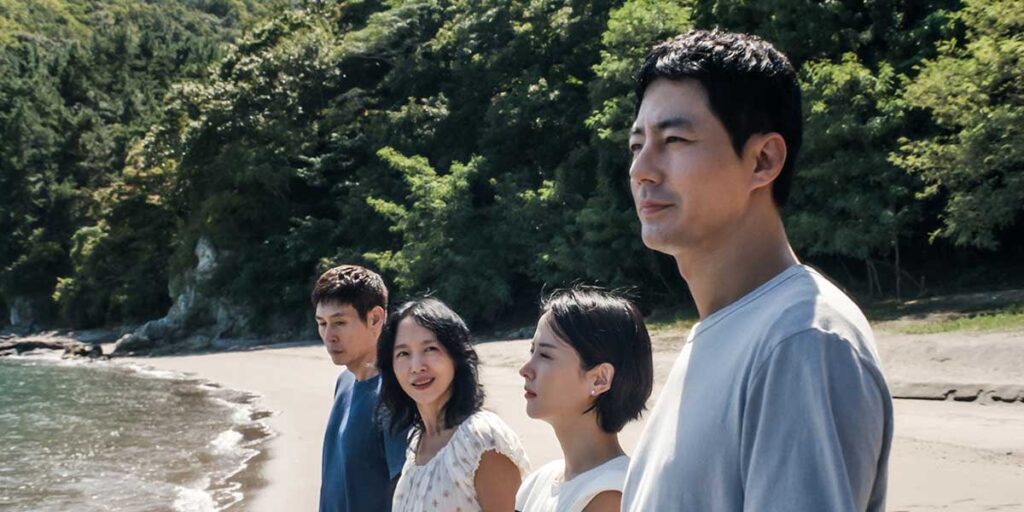
Recently, I returned from the Toronto International Film Festival. What follows is a record of the films I saw—and the things I experienced.
Thursday, September 10th
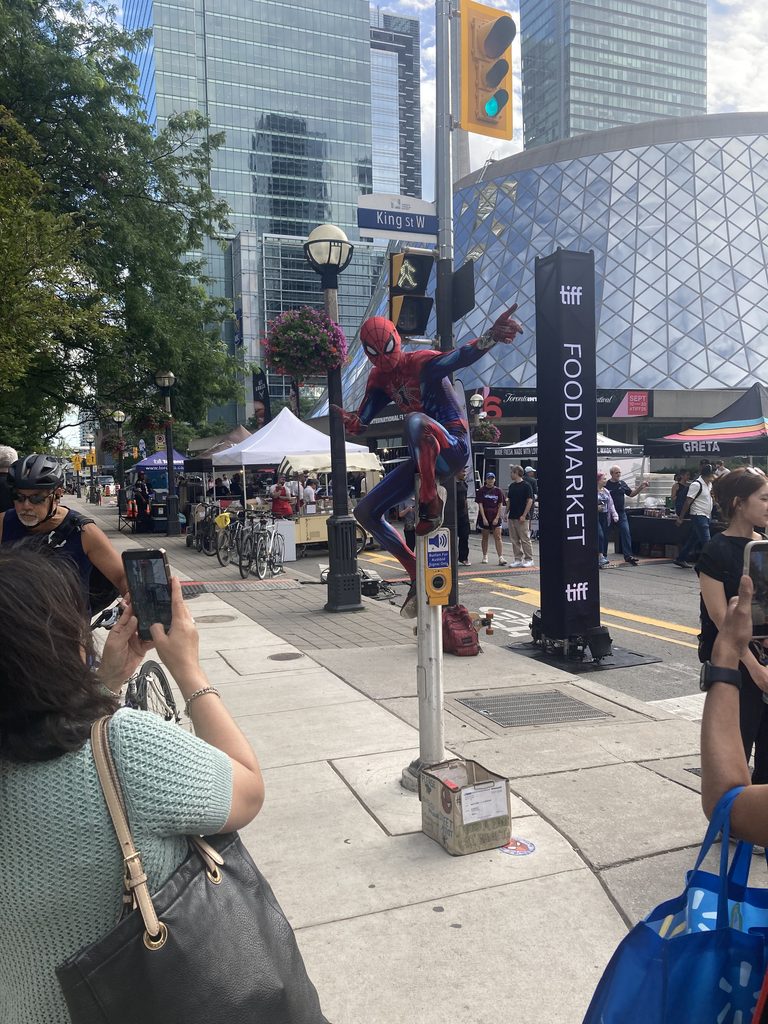
As Spider-Man perches on a metal pole, a bystander raises his camera. “Are you reporting for the Bugle?” Spidey queries. “I’m not working for Jameson,” camera-man impishly replies. Welcome to Festival Street, TIFF 2026.
In a way, spotting a superhero impersonator felt like the perfect beginning to TIFF. For all the festival’s cinephile bona fides, it welcomes both populist crowd-pleasers and arthouse curiosities like Nicolás Pereda’s “Everything Else Is Noise,” my first TIFF film of the year.
A claustrophobic comedy about two composers (Rosa Estela Juárez Vargas and Teresita Sánchez) being interviewed by an awkward journalist (Lázaro G. Rodríguez) in Mexico City, “Everything Else Is Noise” begins with honking horns and ends with hysterical laughter. It’s about the sounds, both irritating and beautiful, that shape our lives—and it’s at once fascinating and perplexing.
Friday, September 11th
This morning, I walked up the Baldwin Steps to Casa Loma. There, I felt profoundly lonely and profoundly connected to everyone around me—including a suave, hirsute fellow smoking a cigar on a bench and a scampering squirrel with shadow-colored fur (even the squirrels are more dashing in Canada).
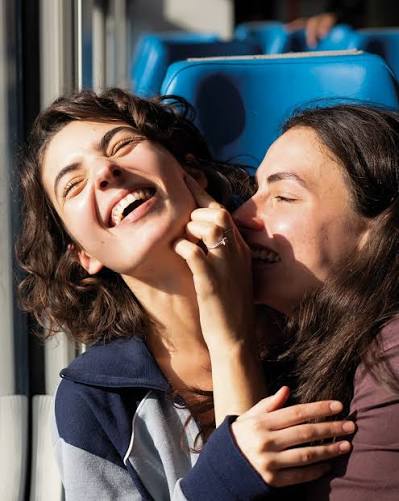
The more impressive ascent, however, was the climbing of Mt. Etna in Irene Dionisio’s “Idda,” an elemental tale of two friends (Tecla Insolia and Romana Maggiora Vergano, left) and a journey that becomes a mystical farewell.
Filled with primal imagery—from the corpse of a dead fox to a dark, vaginal cavern—“Idda” depicts a tragic friendship and its inevitable end with poetic flair. While a man promises that the two heroines could “see the volcano’s soul,” the real inferno is the eruption that comes from within them.
Saturday, September 12th
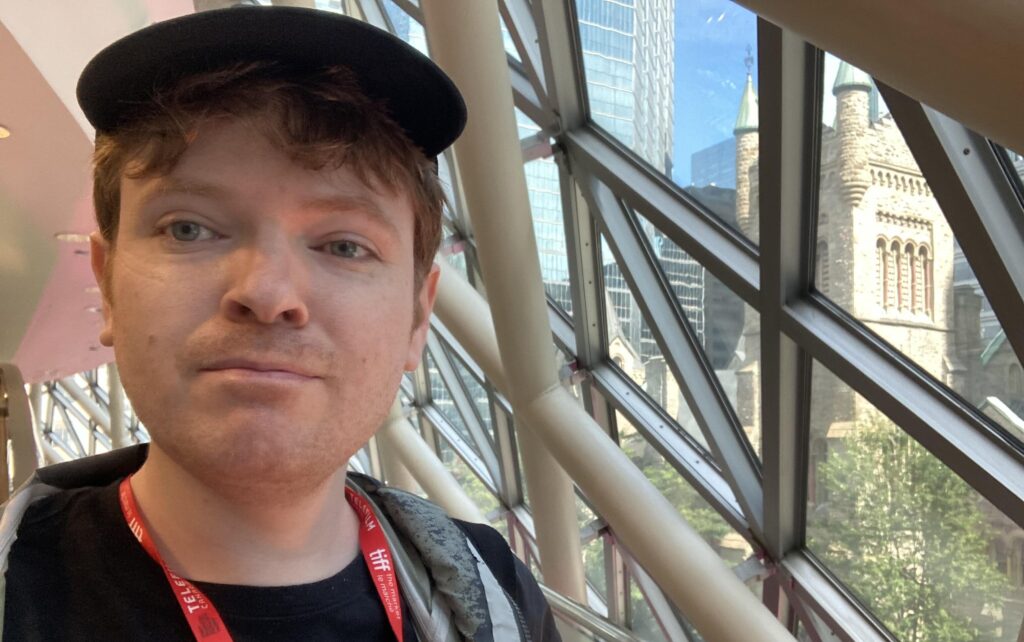
Today marked my first visit to Roy Thomson Hall, home to the iconic windows that brought futuristic gravitas to the first scene between Ian McKellen and Patrick Stewart in “X-Men” (2000). That said, I was there to see another superhero: K-pop deity Lisa, the subject of Sue Kim’s propulsive documentary “Always Lalisa.”
Later, I heard someone remark that while “Always Lalisa” was more authentic than they expected, there’s only so much truth to be revealed in a documentary made with the cooperation of its subject. I suppose that’s true, but the film chronicles Lisa’s work as a solo artist with sleek grandeur and eerie intimacy, illuminating the exhilaration and isolation of her year off from Blackpink.
In part, “Always Lalisa” is about the contradictions Lisa experiences as a Thai artist creating within a K-pop phenomenon of international proportions. Much of her identity is rooted in her many alter egos, an idea that blooms on a very different scale in Stephanie Ahn’s “Bedford Park.”
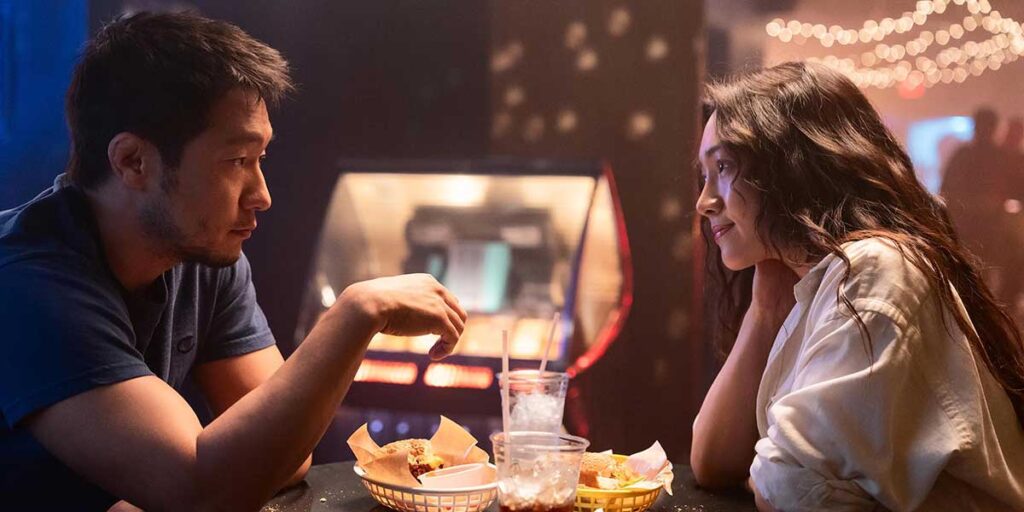
“Bedford” stars Moon Choi (fearsome, vulnerable) and Son Sukku (volatile, tender) as Audrey and Eli, two second-generation Korean Americans living in New Jersey. She’s temporarily suspended from her job as a physical therapist; he’s waiting for his car to be repaired. She agrees to chauffeur him to the mall where he works as a security guard; agonizingly, inexorably, they grow about as close as two human beings can be.
At once operatic and lived in, “Bedford” is a saga of fate and love that reaches for grandeur without sacrificing realism. It’s one of the most poignant and engrossing films I’ve seen at TIFF, not least of all because of Ahn’s richly romantic imagery (Audrey and Eli’s first kiss is viewed through a rain-covered windshield, their passion at once obscured and enhanced by the rising storm).
If “Bedford Park” is a soulful affirmation, Jonathan Schey’s “Everybody Wants to Fuck Me” is a smarmy prank. Apparently, this is what passes for “high concept” these days: a London curator (Taron Egerton) is punished for his lecherousness by being cursed with universal appeal to the opposite sex (including his own mother and—woof—his dog).
I hope no one mistakes “Everybody” for a feminist manifesto. It’s infuriatingly narrow in its depiction of both women and men, constructing a dimension-less narrative of victims and revenge seekers, predators and well-mannered predators. If Schey believes he’s thoughtfully defending the ladies and challenging the gentleman, he’s sorely mistaken.
Sunday, September 13th
Today, I entered a temple of acolytes and nonbelievers. At the premiere of Zack Snyder’s “The Last Photograph” at the John W. H. Bassett Theatre, the Snyder faithful were present (“We love you, Zack!” one fan yelled), but so were the skeptics who snickered at the film (and its reliance on a highly metaphorical yellow butterfly).
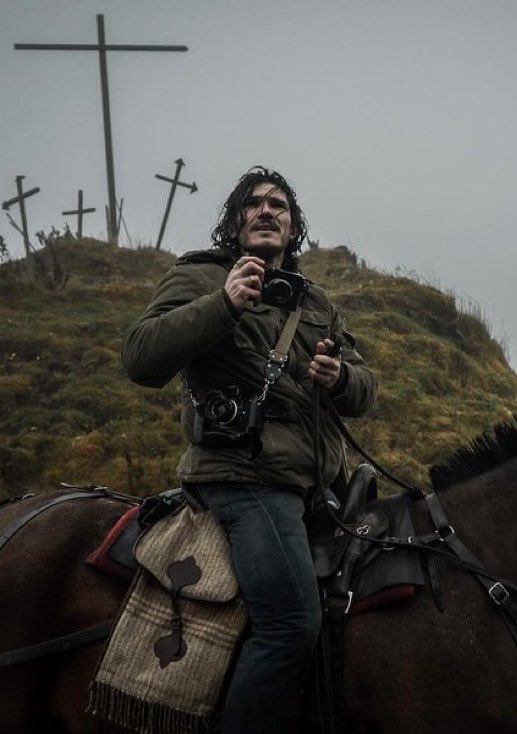
In terms of plot, “The Last Photograph” is about an ex-DEA agent (Stuart Martin) and a war photographer (Fra Free, left) rampaging through South America. Ideologically, it’s stylish far-right propaganda, complete with an evil queer pimp and a reference to vile xenophobe Morrissey as “the king.”
Admittedly, it’s hard to turn away from a film this transfixingly ugly—and Snyder knows it. Before the screening, he vowed to keep making movies until he was stopped, which suggested that he knew what he’d wrought and was eager for a fight.
Monday, September 14th
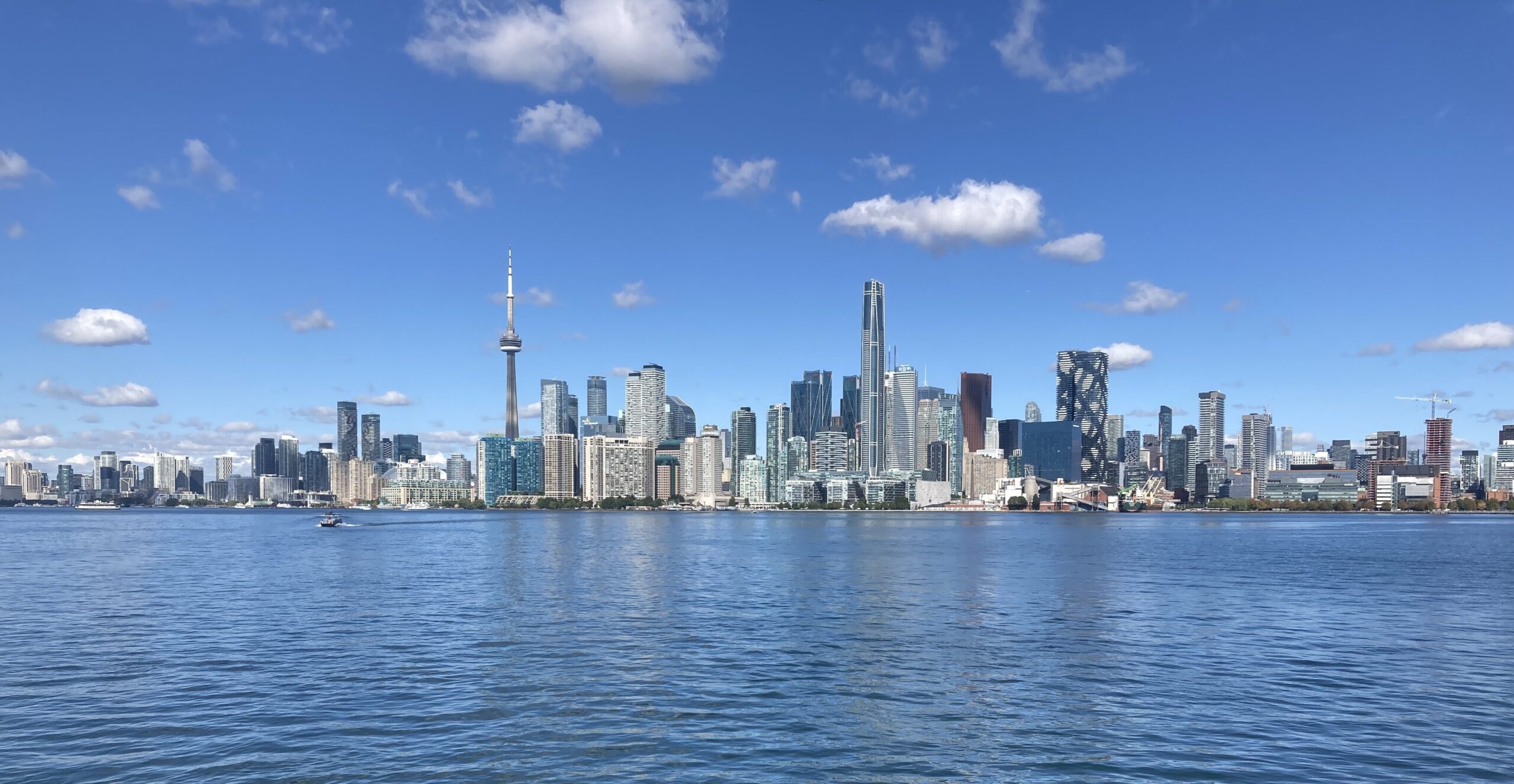
My final full day in Toronto began with a quick ferry ride to Ward’s Island and back—all I had time for before three back-to-back screenings at the Princess of Wales Theatre. On the water, I made a silent vow not to forget the ideas, emotions, and passions this trip has stirred. It’s left me more committed than ever to my work, but also more open to all that I have yet to experience.
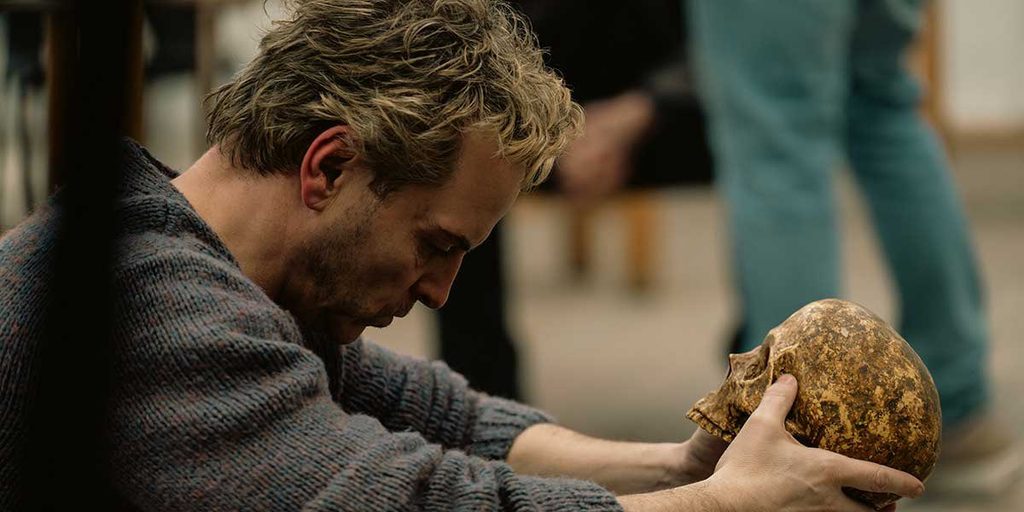
By far, the biggest disappointment of the day was Simon Stone’s “Elsinore,” which stars Andrew Scott as the entrancing Scottish actor Ian Charleson. Like most moviegoers, I knew Charleson from “Chariots of Fire” (1981), but “Elsinore” focusses on his much-heralded performance as Hamlet at the National Theatre in 1989, shortly before his death from AIDS.
In “Elsinore,” Ian dismisses film as a director’s medium, believing it leaves his acting in pieces. He craves the unbroken immediacy of theater—which is why it’s ironic that Stone glosses over rehearsals and performances with slick montages, putting us at a maddening distance from an unyielding artist.
There’s no room for such superficiality in Lee Chang-dong’s “Possible Love,” his first film since “Burning” (2018). Both movies feature psychological showdowns between wealthy and working-class characters, but “Possible Love” forgoes the Hitchcockian thrills of “Burning,” embracing the haunting transcendence of (mostly) ordinary life.
“Possible Love” continued two prominent TIFF 2026 themes: voyeurism and friendship. As a deep-pocketed documentary filmmaker (Cho Yeo-jeong) befriends a woman (Jeon Do-yeon) whose husband (Sul Kyung-gu) was brutally beaten for going on strike, societal, journalistic, and emotional lines are crossed, building to a heartfelt and explosive reckoning.
If there was a better film at TIFF this year, I didn’t see it. With equal parts intensity and grace, Lee keeps you in suspense as he leads you to one of the great scenes of 2026: Jeon’s character valiantly defending her husband from the documentary filmmaker’s invasive questions, an act of spousal chivalry even more moving than Felicity Jones raging at Guy Pearce at the end of “The Brutalist.”
At the “Possible Love” screening, Lee self-deprecatingly referenced his tendency to take eight years to make one film. His methodical craftsmanship makes his work visually and intellectually rich, but there’s something to be said for directors who just get on with it. Like, for instance, Hirokazu Kore-eda, who returned to TIFF, for the first time since “Monster” (2023), with “Look Back.”
Following the underrated sci-fi drama “Sheep in the Box,” “Look Back” is Kore-eda’s second film this year—and a more harrowing offering by far. “Sheep” ended with a tidy reconciliation between a couple and their adopted robot child; “Look Back” ends with a tidal wave of pure feeling, bringing the bond between two artists (Natsuki Deguchi and Aju Makita) to a wrenching close.
Being unfamiliar with the Tatsuki Fujimoto manga on which “Look Back” is based, I was unprepared for the punch in the heart that arrives in the third act. It’s the kind of twist I could only accept from a filmmaker as sensitive and sincere as Kore-eda, who earns your anguish not through cloying theatrics, but through his compassionate depiction of young artists at work.
By the time the screening ended, it was around midnight, but Kore-eda stuck around to answer questions and meet fans. As I left the theater, I glanced over my shoulder and saw his head bent low as he reached over the edge of the stage to sign autographs. I was already looking forward to the next time he’d be at TIFF—and the next time I would be, too.