
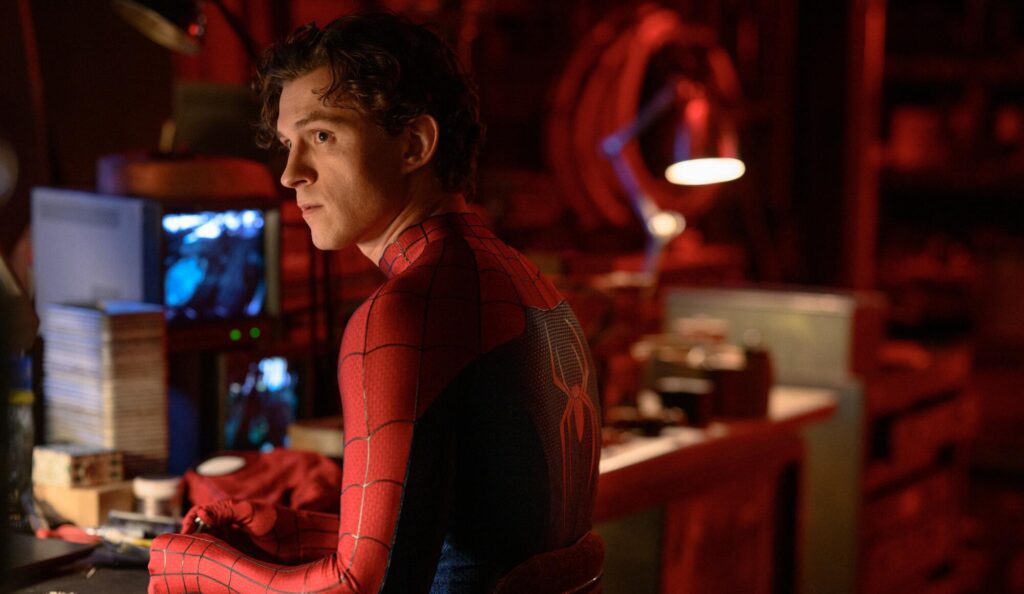
When Peter Parker (Tom Holland) is asked whether he’s Peter or Spider-Man in “Spider-Man: Brand New Day,” he resolutely declares, “I’m both”—a stirring sentiment that, as a parishioner of the Church of Spidey, I must protest.
It is true that in the Marvel Comics mythos, Peter masquerades as Spider-Man, defending the Five Boroughs from miscreants frightening (the Green Goblin) and foppish (“Fancy” Dan Crenshaw). It is also true that Spidey is less an alter ego than a security blanket, just barely shielding Peter from the agony of grief and guilt.
“Uncle Ben was killed that night for being the only one who did the right thing,” Peter (Tobey Maguire) says sorrowfully in “Spider-Man 2” (2004), reliving the tragedy that compelled him to seek the solace of a mask. Superheroism, it turns out, isn’t just escapism for moviegoers; it’s escapism for superheroes.
When Holland first took up the Spider-Mantle, Peter mostly needed to escape the influence of Tony Stark/Iron Man (Robert Downey Jr.), whose tutelage reduced Peter to a cheery janitor sweeping up after a billionaire mentor. (A mentor who, lest we forget, gifted his protégé with a Spidey costume that had an “instant kill” function. Ugh.)
“You’re never going to be Iron Man,” Happy Hogan (Jon Favreau) told Peter in “Spider-Man: Far From Home” (2019). Thankfully, that turned out to be true: By the end of “Spider-Man: No Way Home” (2021), Iron Man was rusting in peace and Peter was sewing a new, non-lethal bodysuit that symbolized his solitary recommitment to humble urban heroics.
“Sometimes you’ll be really lonely,” Aunt May (Marisa Tomei) tells Peter in an eerie flashback featured in “Brand New Day.” “And sometimes, because you’re special, people can do dark and monstrous things to you.” It’s a grim promise that the film fulfills, plunging us into the soul of a superhero who protects a city he’s barely part of.
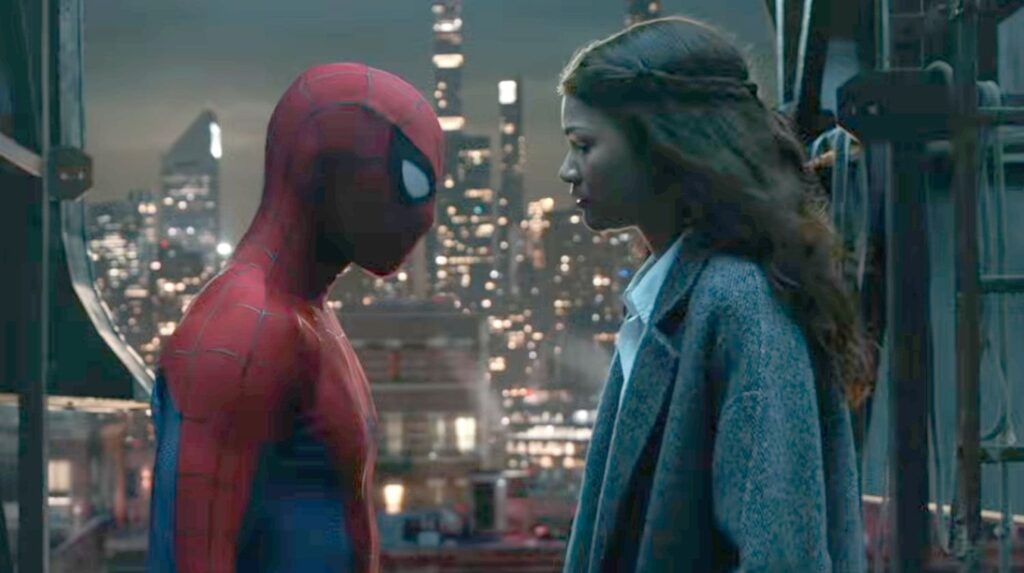
In “No Way Home,” a universe-shattering showdown forced Peter to forsake his girlfriend, MJ (Zendaya), and his best friend, Ned (Jacob Batalon). Now, he’s a vigilante voyeur, tussling with Z-list villains like Scorpion (Michael Mando) who probably know him better than the loved ones he gazes at from afar.
“Trust me, being married to the job never ends well,” Detective Jean DeWolff (Liza Colón-Zayas) warns Peter. The job of being Spider-Man, however, is all Peter has left (unless you count a “We Are Happy to Serve You” coffee cup from MJ that he has mournfully hoarded for four years).
Like many a Marvel lackey, “Brand New Day” director Destin Daniel Cretton is burdened with a wearying directive: to cajole audiences into gulping down Marvel content past (cue the r/marvelstudios-style metacommentary) and future (cue a degrading cameo for “Avengers: Doomsday” star Florence Pugh).
“What if you’re trying to control the expression of something that needs to be expressed?” Bruce Banner (Mark Ruffalo) asks Peter, whose body is becoming increasingly spider-like. You could also pose that question to “Brand New Day,” which eventually cracks its way out of a cocoon of Marvel Cinematic Universe gunk.
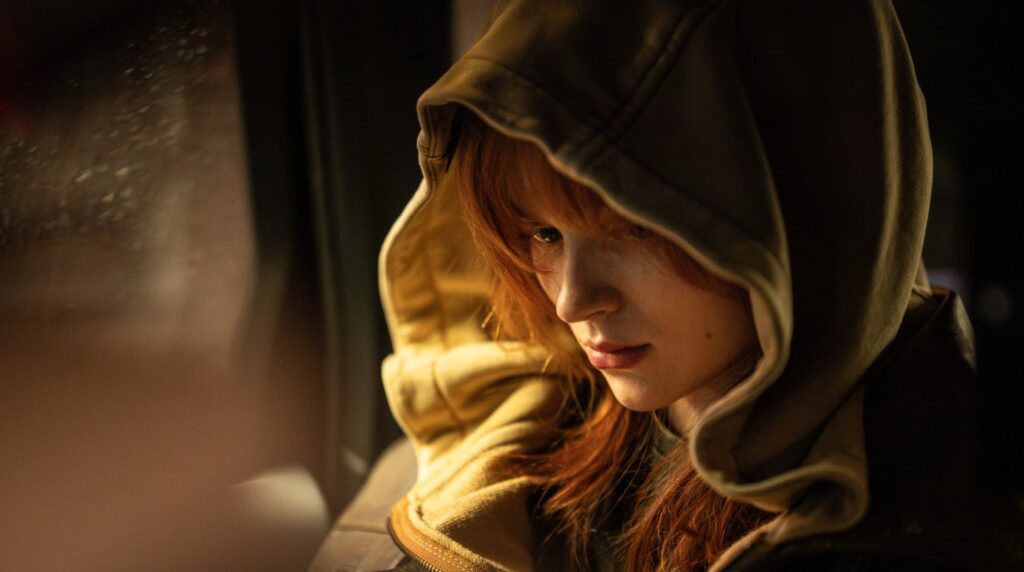
Ironically, the catalyst for that rebirth is a raging comet from another constellation in the MCU: Jean Grey (Sadie Sink), a fugitive telepath (and future X-Men draftee) who taunts Peter by speaking through MJ, uttering every word he’s hungered and feared to hear from the woman he loves.
“True love’s kiss breaks the spell and reunites the star-crossed lovers,” Jean purrs mockingly. Like the murderous Frank Castle (Jon Bernthal), she is a super-frenemy who is even more angry, isolated, and broken than Peter, who glimpses a barely distorted reflection of himself in both characters.
“It’s as if the movie were presenting comic-book villains as an identity group in need of salvation,” Variety’s Owen Gleiberman wrote derisively in his review. While he’s not wrong, the empathetic grace he clocked in the movie is a feature, not a bug (or an arachnid).
In the Spider-Movies, there is no tenet more sacred than Peter’s belief that the truest victory is to understand his adversary through the prism of his own pain—a conviction that reached its zenith in “Spider-Man 2” when he persuaded Dr. Otto “Doc Ock” Octavius (Alfred Molina) to loosen the grip of his power-mad tentacles.
“Sometimes, to do what’s right, we have to be steady and give up the thing we want the most,” Peter told Otto. “Even our dreams.” His manifesto reverberated because it was less judgmental than confessional, spoken by a flawed hero whose insight was wrenched from his own mistakes.
In “Brand New Day,” Peter’s wisdom is drawn from the experience of leaping off a rooftop in the rain…and waiting as long as possible to discharge a web and swing to safety. To appeal to Jean and Frank in their lowest moments, he has to fall—to suffer so he can assuage suffering.
“Spiders have three life cycles,” proclaims the narrator of a nature documentary Peter watches. Unsure how many cycles he has left, he’s an ideal protagonist for a humanist like Cretton, who is a veteran of both Marvel spectacle (“Shang-Chi and the Legend of the Ten Rings”) and lacerating drama (“Short Term 12”).
Hot on the anguished heels of Jake Schreier’s “Thunderbolts” (2025), Cretton has directed arguably the second post-pandemic Marvel film about a mental health crisis—and like Schreier, he prefers present-tense emotion to the nostalgic pandering that has defined the age of superhero fatigue.
“I have no one,” Jean tells Peter, who reminds her, “You have me.” Those words matter more than wisecracks per capita, organic versus mechanical web shooters, or any other amazingly inane issue dividing Spider-Fans. As Spider-Man’s latest adventure affirms, we have something more important: We have him.


One Response