
Confession: One of my favorite scenes of 2025 is from the atrocious “Hurry Up Tomorrow,” in which a demented “fan” named Anima (Jenna Ortega) forces the Weeknd to listen to her amateurish commentary on his music.
“It’s actually a really emotional song!” she declares as “Blinding Lights” blares. “It’s about emptiness, separation, heartbreak. You lose the one that you love. You can’t even sleep because you lose her. That resonates with so many!”
Having been securely tied to a hotel bed, the Weeknd is in no position to respond coherently to his captor’s insight. That, of course, is the point: Anima is hungry for her analysis to transcend his art, to become a work of art in its own right.
To me, that desperation is all too familiar. While I settled on a career in film criticism early, I chose it after detours into short stories, poetry, and, yes, filmmaking (tenacious readers may still be able to locate a soap-operatic short that I directed somewhere in the rancid cosmos of YouTube).
Few people think of film criticism as art (though I still dream of a world where Anthony Lane’s rapturously vulnerable ode to Lukas Moodyson’s “Lilya 4-Ever” is hung on the walls of the Tate Modern). Yet for a critic, a review can fulfill the same yearning as a work of art: to connect.
That’s what I endeavored to do this year, whether I was writing about isolation and insecurity (“Materialists”) or optimism and sincerity (“Superman”). It sounds crude to say I was using the movies, but in a way, I was using them—as an occasion for expression.
Amid the aftershock of the pandemic and the ascendance of streaming—the two horsemen of the cinema apocalypse—celebrating a year of moviegoing is a poignant affair (like many critics, I’m chilled by the prospect of Hollywood no longer making movies for theaters, or no longer making movies at all).
And yet, in defiance of artistic, economic, and political odds, big-screen cinema endures. You can chock that up to nostalgia, a death twitch, or a final rage against the dying of the projector’s light, but I think the answer’s simpler: Filmmakers want to make movies and we want to see them.
Or, in my case, rank them, a process that can be as therapeutic as it is journalistic. To invoke my favorite fictional critic of the year, this list is actually really emotional! Maybe it’ll resonate with you.
1. “Hamnet”
When I was not yet 13, my parents brought me to an outdoor production of “Much Ado About Nothing,” taking care to tell me of the characters playgoers revere (Benedick, good and true) and the characters who ought to be jailed by Dogberry (Claudio, may he die a bachelor).
I was lucky that my mom and dad schooled me in the Bard’s prose, but didn’t expect me to comprehend every verse. They knew that in the end, I would have to trust myself to understand enough. To keep, as Agnes (Jessie Buckley) in “Hamnet” would say, my heart open.
Like a mantra, “Keep your heart open” echoes throughout “Hamnet”—not only to preserve the wisdom of Agnes’ long-dead mother (Louisa Harland), but to invite you to experience the film with your whole self: eyes, ears, aortic pump.
“What story would you like?” William Shakespeare (Paul Mescal) asks Agnes in the early days of their courtship. “Something that moves you,” she replies. He will spend the rest of his life telling her stories—first to woo her, then to transcend the tragedies that wound them both.
To say that “Hamnet” is based on a novel based on a truth (that Shakespeare had a son who perished) is both accurate and inadequate. As told by Oscar-winning director Chloé Zhao (“Nomadland”), the tale is not only alive; it grows, like a gnarled tree extending from moist earth to endless heavens.
As you grow with “Hamnet,” you are overwhelmed by all that it has to offer: lust, joy, rage, grief, despair. It is a film that leaves you drained but liberated, as if the darkest, bitterest emotions had been purged from your body and mind.
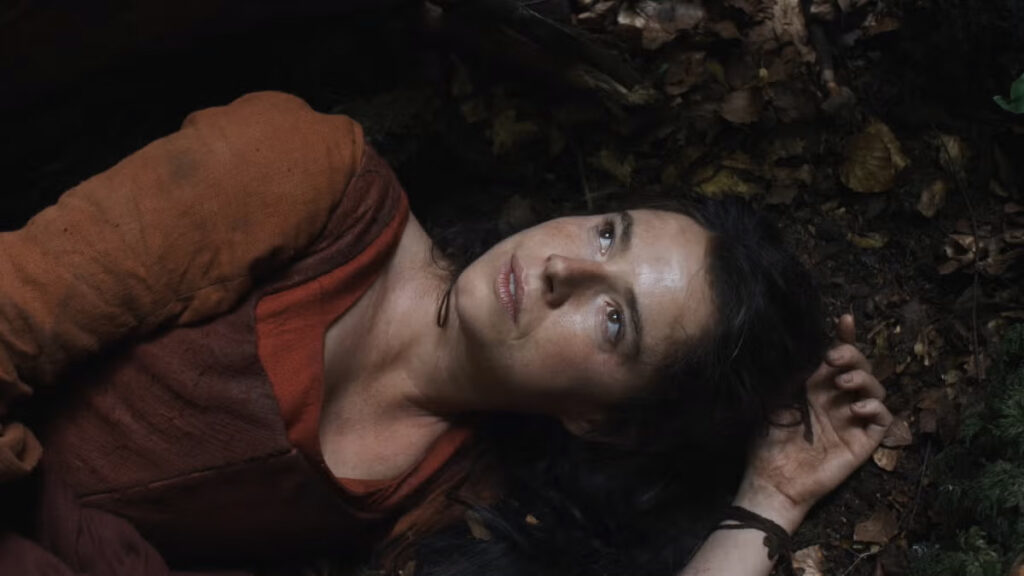
“That place in your head is now more real to you than anywhere else,” Agnes tells Will. Yet when she beholds “Hamlet” at the Globe Theatre, “that place” becomes a purifying force that is just as real to her—especially when she reaches her hand toward the actor playing Denmark’s vengeful prince (Noah Jupe).
Gradually, the rest of the audience joins Agnes, a sea of hands rippling toward the surprised player. They may not know Agnes’ suffering, but because they are moved by the story inspired by it, she is less alone. As are you.
2. “Relay”

“The Empire Strikes Back” (1980) is a better movie because Luke Skywalker and Darth Vader share DNA. “The Illusionist” (2006) is a better movie because Jessica Biel is resurrected as Juliet in slacks. David Mackenzie’s “Relay” is a better movie because…well, I’m not going to spoil that.
With its ingenious third-act twist of the narrative knife, “Relay” is a film guaranteed to provoke resistance. (What? No! It can’t be!) Yet as the blade sinks in, so does the weight of screenwriter Justin Piasecki’s grand ambition: to construct a propulsive chronicle of male loneliness within the architecture of a quasi-romantic thriller.
Loneliness is the default setting of Ash (Riz Ahmed), a wraithlike operative who negotiates the suppression of scandalous corporate secrets via the Tri-State Relay Service (a fictional institution similar to actual communication services for people who are deaf or hard of hearing).
“So I grew up Muslim in New York, post-9/11,” Ash recalls in an AA meeting. “It was crazy.” Crazier still is his solitary and dangerous work, which instills him with focus and purpose, but leaves him desperate for companionship—a desire that is his undoing and, perhaps, his salvation.
Though Ash’s aloneness is haunting, it is never oppressive. Like Jason Bourne on a budget, he dodges sinister lackeys at Pittsburgh International Airport and in Times Square, baffling his pursuers and thrilling audiences who have been overfed action and are starved for suspense (“Relay,” it must be said, is a far zestier “Mission: Impossible” movie than 2025’s “Mission: Impossible – The Final Reckoning”).
Scrumptious tension is a specialty of Mackenzie (“Hell or High Water,” “Perfect Sense”), who has crafted the opposite of a finicky auteur film. You don’t watch “Relay” for obsessions or idiosyncrasies; you watch for the pure pleasure of finding out what will happen to Ash next. So go find out.
3. “Materialists”
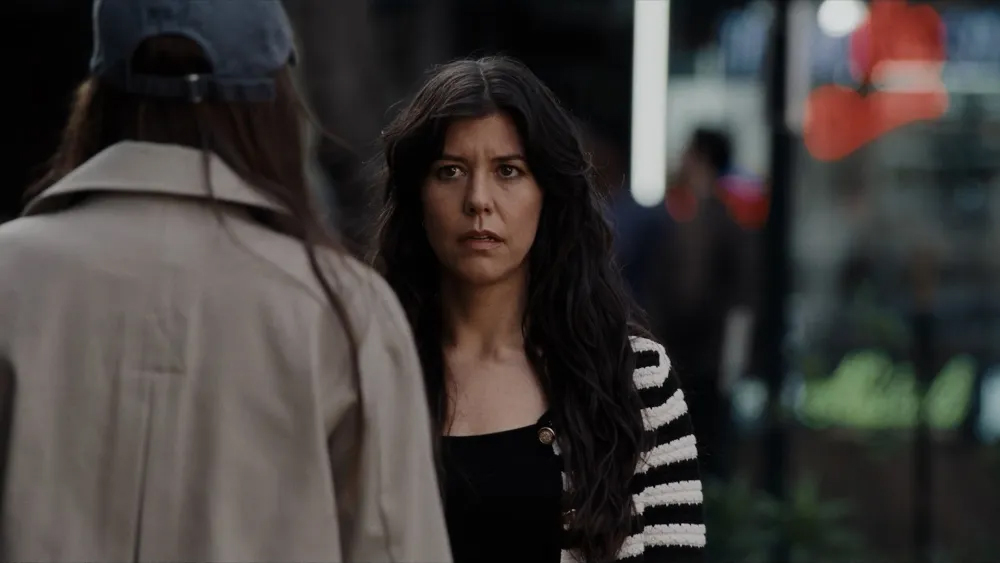
Lucy M. is wearing a ball cap, an overcoat, and a pair of Nikes. It’s the kind of disguise you don when you’ve never worn a disguise before: a stab at inconspicuousness that makes everyone look your way.
Everyone, that is, except Sophie L. The moment Lucy appears in front of her, Sophie strides away from her and into one of those crowds that seem to only exist in movies filmed in New York, where one face (or two) can emerge with crystalline clarity from a crowd of silent pedestrians.
“You don’t want to talk to me,” Sophie declares as Lucy catches up to her. It sounds final, but it isn’t. Because Lucy does want to talk to Sophie—if only to apologize for a mistake that should render any apology vaporous and meaningless.
“I didn’t know what he was capable of,” Lucy pleads. “You didn’t know who he was,” Sophie corrects her angrily. “As a person. As a man. Well, I went on a date with him and found out.”
Predictably, Lucy deploys her usual rationale after one of her matchmaking clients returns from a disastrous date: “He checked a lot of our boxes.” Only this time, she utters those words weakly, clinging to them even as she comes to terms with their disingenuousness.
“The truth is you set me up with that man only because you think I’m worthless,” Sophie tells her. “Worthless merchandise to pawn off to anyone who’d take it. But I am not merchandise. I’m a person. And I know I deserve love.”
While Sophie’s voice begins to break, she manages to shout out a parting “Fuck you!” before she departs, leaving Lucy alone—but not as before. For the first time in “Materialists,” she’s a box looking for something more than a checkmark.
4. “Superman”

See me in my theater seat
I’m bored watching Clark Kent brood
I want James Gunn to take the wheel
A reboot’s coming
I’m listening to David Corenswet with no fear
You can hear him too if you’re sincere
Superman’s a punk idealist, yes, he is
Well, he’s a punk optimist, yes, he is
’Cause he’s a punk romantic, yes, he is
Well, he’s a punk hero, yes, he is
5. “Sinners”
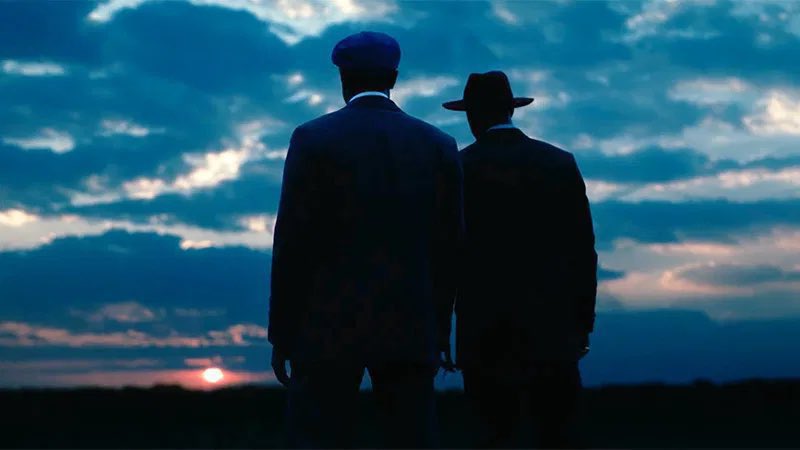
On October 16, 1992, an old man with a scarred face sits alone at a bar in Chicago—but not for long. Exuding effortless power, a younger-looking couple saunters up to the lone elder, leading him to ask: “How?”
For writer-director Ryan Coogler, a new film is always an opportunity to ask (and answer) that question. How did Oscar Grant III live on the last day of his life? How did Adonis Creed step out of his father’s shadow and into his shoes? How did T’Challa decide to be an interventionist instead of an isolationist?
With “Sinners,” Coogler poses his boldest “How?” yet: How did Sammie Moore (Miles Caton), a fervent blues prodigy, survive a night of fang-filled mayhem at a Mississippi juke joint in 1932? Simple: with the help of his coveted guitar, his wily twin cousins, Smoke and Stack (Michael B. Jordan), and, possibly, the spirits of musicians throughout the millennia.
“Before the sun went down, I think that was the best day of my life,” a much-older Sammie (Buddy Guy) tells Stack. “Was it like that for you?” “No doubt about it,” Stack replies, speaking not only for himself, but for moviegoers grateful to have once again seen the world through Coogler’s delighted, wary, and all-seeing eyes.
6. One Battle After Another

I know, I know; how I dare I put one of the best movies released by a major American studio at number six? It’s insultingly low, when you think about it! I may as well have left the film off my top 10 entirely (or worse, classified it as an honorable mention).
Clearly, I don’t love “One Battle After Another” as ardently as many of my colleagues do (the bar for ardor is high with this one!). Nevertheless, I do love its mischief, its defiance, its disappointment in the generation its director belongs to, and its faith in the generation its youngest star represents. That may not be everything, but for me, it’s enough.
7. “Jay Kelly”
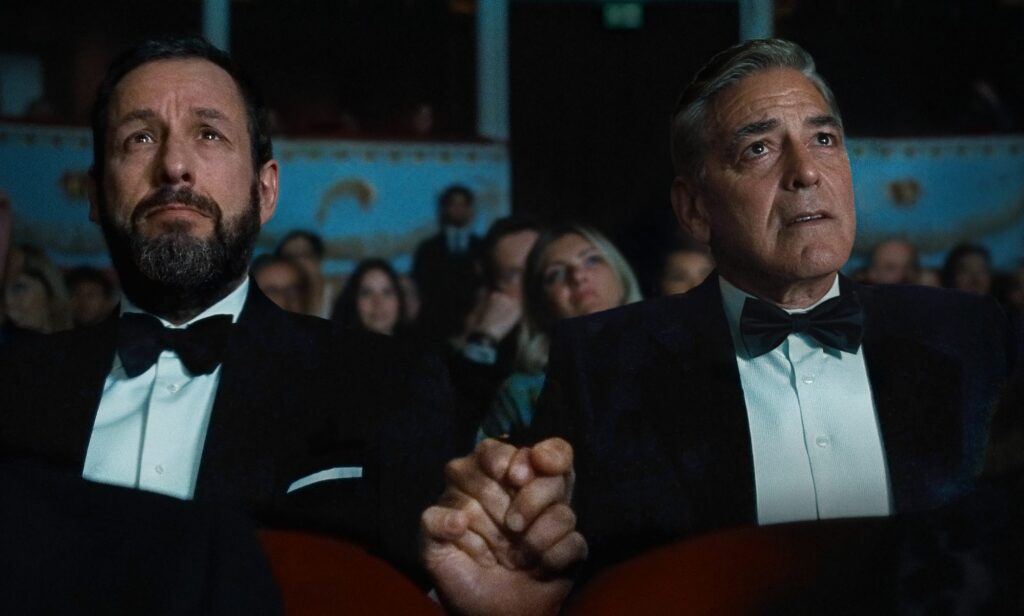
Noah Baumbach’s “Jay Kelly” is a film about the magic of movies—specifically, the magic of movies where George Clooney endures a midlife crisis, seeks to enrich his emotionally vacant life, and ultimately decides that superficial pleasures are better than no pleasure at all.
“Lately, I feel like my life doesn’t really feel real,” Jay (Clooney), a waning Hollywood star, says. It’s no coincidence that those could also be the words of past Clooney characters like Ryan Bingham in “Up in the Air” (2009), Baird Whitlock in “Hail Caesar!” (2016), and the fantastically voiced Mr. Fox (who, cuss or no cuss, remains one of Clooney’s most soulful charlatans).
Unlike certain equivalent stars still clinging to the veneer of youth, Clooney seems to levitate through perpetual limbo. He is as weathered as he is ageless—qualities that make him the ideal leading man for a novelistic, ruminative film like “Jay Kelly.”
“Thinking about her leaving, I feel like I missed it,” Jay says as his youngest daughter, Daisy (Grace Edwards), prepares for a summer sojourn in France. Such musings are apiece with the film’s pleasantly wistful nature, even if the famously caustic Baumbach refuses to evade the harsh truth: that there’s very little that Jay doesn’t miss by choice.
“All my memories are movies,” Jay says. If that’s true, it’s a shame that “Jay Kelly” was released by Netflix, which gets off on repackaging full-course cinema as worm food for the algorithm (sadly, Baumbach’s film received only a perfunctory theatrical release, for awards purposes).
And it gets worse: With Netflix on the cusp of owning Warner Bros., the streamer may soon have the power to complete its unacknowledged but obvious conquest: to eradicate movie theaters and monopolize storytelling itself, obliterating the kind of communal narrative experience that Baumbach venerates.
For that reason, I think I’ll amend my statement that “Jay Kelly” is about the magic of movies. Instead, I’ll say that Baumbach and Clooney didn’t just celebrate cinema. They co-signed its death warrant.
8. “Ballad of a Small Player”
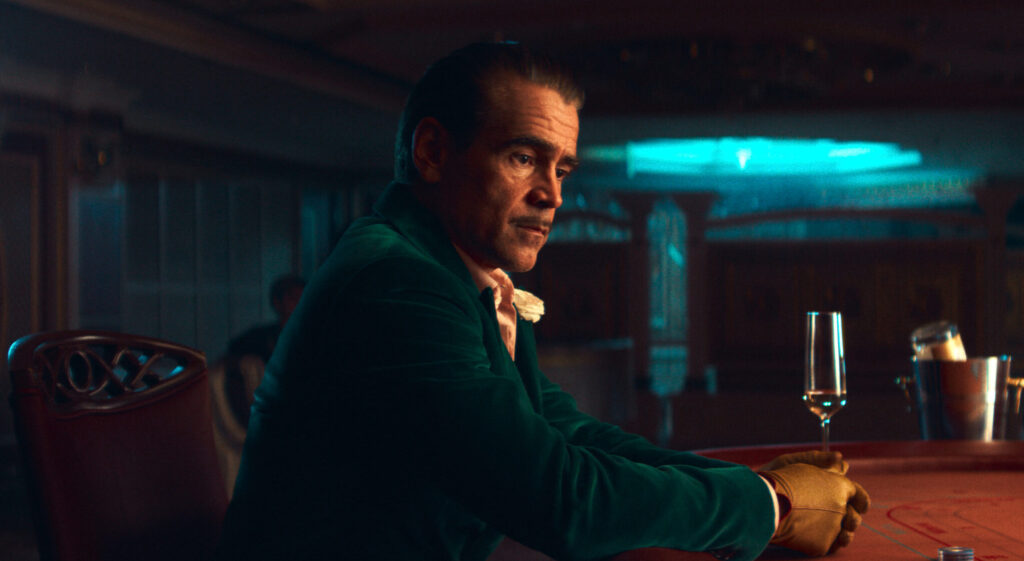
The most shameful secret of Lord Doyle (Colin Farrell) isn’t that he’s not a lord (though he’s not); it’s that he’s not even named Doyle. “Doyle is not even a posh name,” the scrupulous debt collector Cynthia Blithe (Tilda Swinton) says witheringly. “You couldn’t even get that right.”
There’s not much that Lord Doyle gets right—not in money, not in love, and not in Macau, where he masquerades as a high-born English high roller (in pointed moments, Farrell artfully permits his character’s practiced upper-crust accent to slip).
“I’m standing at a statistical crossroads where it’s possible I keep on losing, but probability says I have to start winning!” Lord Doyle insists. His life, it appears, is based on an inviolable credo: When your coffers run dry, order a heap of caviar and hope for the best.
“It’d take a miracle to change a man like me,” Lord Doyle admits. Strangely, this is exactly what happens in Edward Berger’s “Ballad of a Small Player,” a saga of worldly pleasures (food, sex, respect!) that uncovers moral nourishment in the supernatural powers beneath Macau’s sleek neon surfaces.
“A lord never goes back on his word,” Lord Doyle says repeatedly. A lie, of course, but one he begins to believe, gradually forsaking his sins for the love of a woman: Dao Ming (Fala Chen), an elusive credit broker who is both the object of Lord Doyle’s affection and a mirror of his failings.
Adapted from Lawrence Osborne’s 2014 novel by screenwriter Rowan Joffé (“The American”), “Ballad of a Small Player” is a deft dance through myriad genres. It is a St. Augustine-style confession (infusing “fire on the altar” with fresh meaning) that is also a romantic ghost story, culminating with a tragically beguiling image of Dao: reflected in a gray puddle on a beach, a specter just beyond Lord Doyle’s reach.
In death, Dao doesn’t just loom over Lord Doyle; she guides him. Maybe he never truly knew her, but knew his idea of who she was—an idea that turns out to be enough to ignite miraculous change.
9. “Thunderbolts”
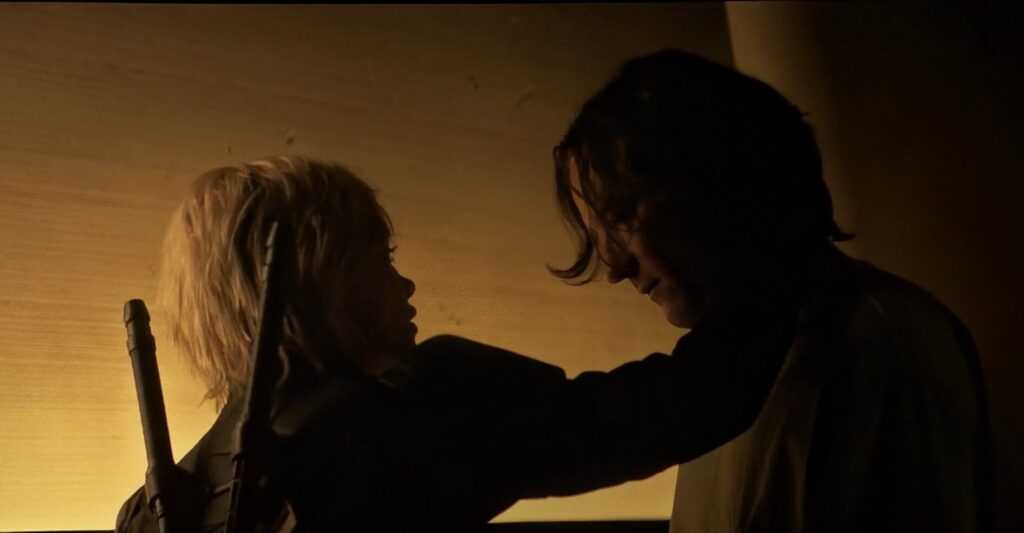
When Bob (Lewis Pullman) asks Yelena (Florence Pugh) how to outrun “the void” of loneliness, she offers him counsel that could leave even a seasoned therapist crumpled on their own couch. “You push it down,” she says. “Just push it down deep.”
Obviously, that’s horrendous advice (or, as Bob jokingly calls it, “really good advice”). It is also, implicitly, a promise that Bob’s isolation—and that of all the titular antiheroes in “Thunderbolts”—will expand like an endless shadow, threatening to engulf everyone around them.
As the director of the 36th (!) entry in the Marvel Cinematic Universe, “Thunderbolts” director Jake Schreier faced a different smothering force: a parasitic movie series long past its prime (to quote Deadpool, “Welcome to the MCU, by the way. You’re joining at a bit of a low point”).
That, of course, makes it all the more admirable that Schreier made a wholesome meal from Marvel scraps (the Thunderbolts are an assortment of sidekicks and nemeses from previous MCU pictures). It takes a genuine coup chef, not a journeyman cook, to transform a pile of franchise leftovers into tomato soup for the post-COVID soul.
“All I do is sit and look at my phone and think about all the terrible things I’ve done,” Yelena confesses. Just as the gleam of Joss Whedon’s “The Avengers” (2012) mirrored the optimism of the Obama era, the grayness of “Thunderbolts” reflects the gloom of the 2020s, making it the quintessential superhero film of the loneliness epidemic.
“What’s up?” Bob asks Yelena as their world literally falls apart. “You know, just watching New York disappear into a big maze of interconnected shame rooms,” she replies. For Batman and Spider-Man, hopelessness is ennobling; for the Thunderbolts, it’s just punishing.
And, when you confront it, freeing. By venturing into his characters’ fractured minds, Schreier allows them to see each other’s hurt more clearly, creating one of Marvel’s greatest splash panels: Yelena and the rest of the Thunderbolts converging around Bob, embracing him as he weeps.
“The thunderbolts ending is pretty accurate because if florence pugh hugged me id stop being depressed too,” one moviegoer wrote on X last year. Sometimes, you just have to let it out. Way out.
10. “Avatar: Fire and Ash”

For Lo’ak (Britain Dalton) alone with waves buffeting shore, moments away from realizing he is more needed and loved than he knew. For Jake Sully (Sam Worthington) nearly resorting to brutal pragmatism, then daring to choose tenuous hope. For the Bridgehead City breakout, one of the most cathartic blasts of blockbuster firepower in recent cinema history. And most of all, for James Cameron, whose care in the face of callousness, ambition in the face of mediocrity, and brash earnestness in the face of pitiable snark has made me a better moviegoer—and, I hope, a better man.
Honorable Mentions: “Being Maria,” “Black Bag,” “Christy,” “The Fantastic Four: First Steps,” “Hedda,” “Highest 2 Lowest,” “A House of Dynamite,” “Megadoc,” “The Naked Gun,” “Night Always Comes,” “No Other Choice,” “Rental Family,” “Roofman,” “Sorry, Baby,” “The Testament of Ann Lee,” “28 Years Later,” “Wake Up Dead Man”